This post may contain affiliate links. This just means I may receive a small commission at no extra cost to you for helping them promote their product or service. I don’t endorse any services I don’t personally use or recommend.
When compared to the brilliant blue lakes of Pangong, the snow-capped peaks of the highest motorable passes in the world, punctuated by lemon-yellow signs proudly proclaiming it, and the sand dunes of the Nubra Valley, the steep-walled canyons of the Zanskar don’t pop on Instagram. You probably have never even seen it.
This motorcycle route in Ladakh is much less traveled than the week-long ride through the high passes, probably because few foreigners know about it. Possibly because it lacks the distinct marketability of “highest passes in the world”, “12 passes ride”, or a smattering of electric blue lakes that are oh so photogenic. Despite this, Zanskar is my favorite place in Ladakh.
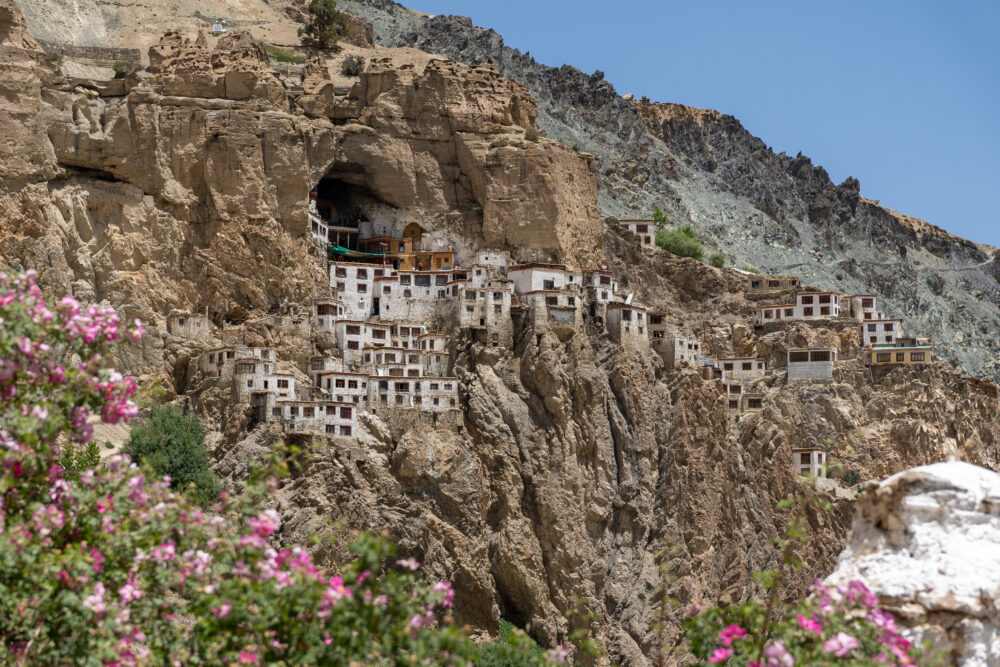
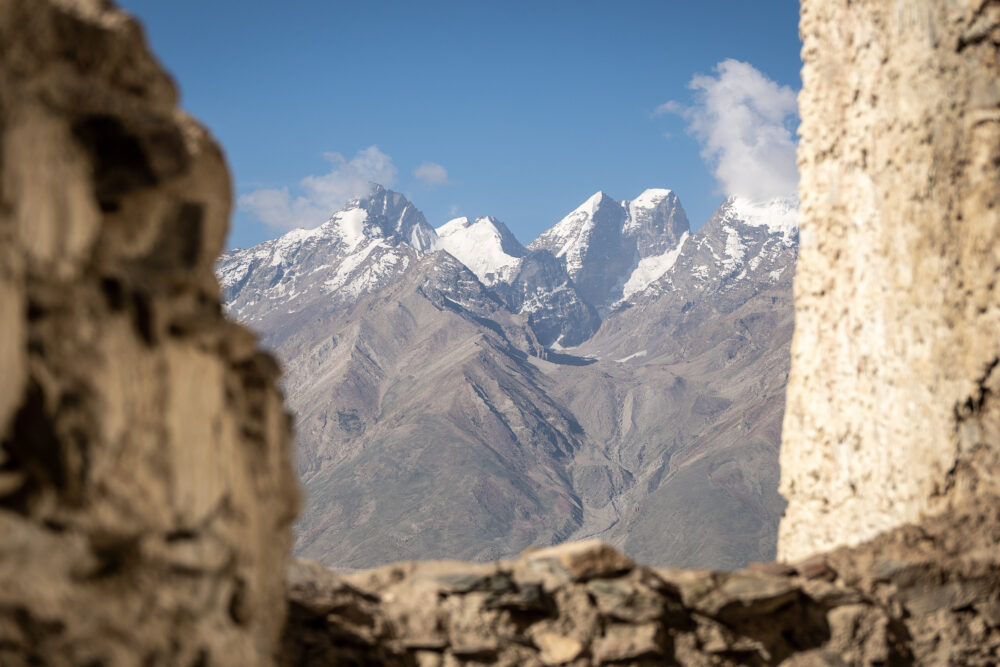
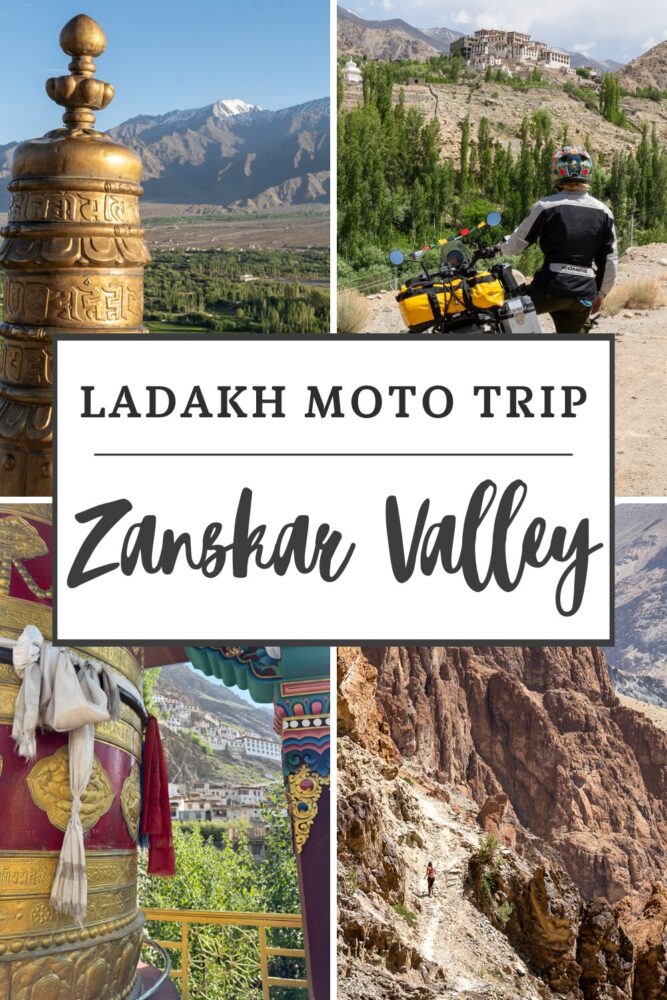
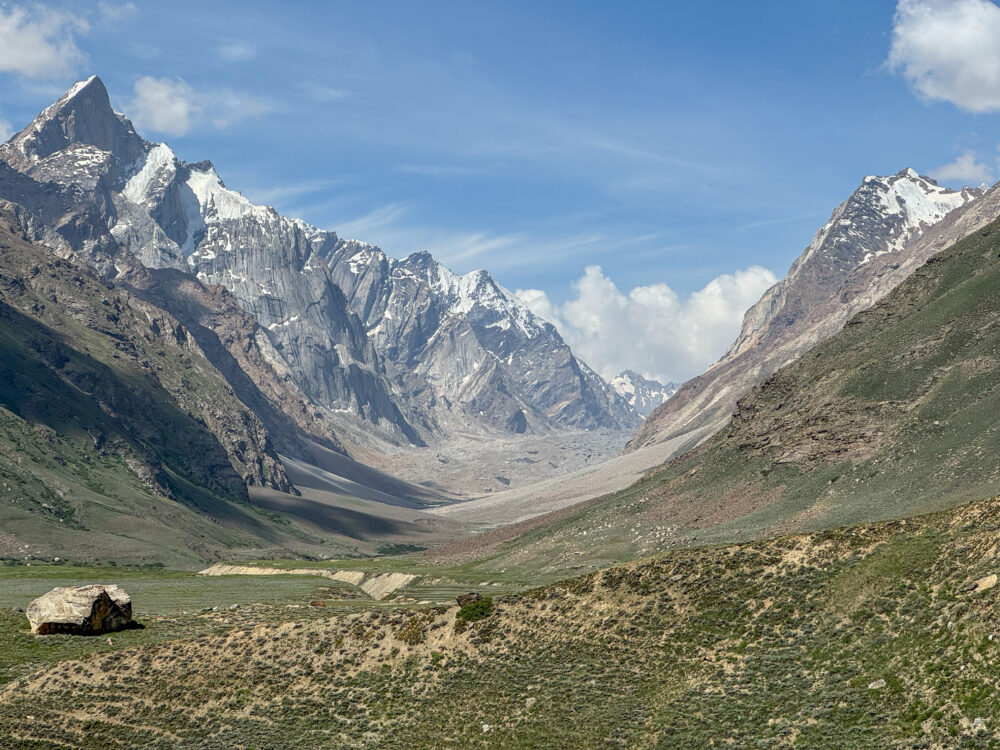
In Zanskar Valley, you’ll find incredible hillside monasteries clinging to the cliff’s edge. Some you must trek to, some are 1,000 years old. You’ll ride a ribbon of asphalt into the far reaches of the canyon, with walls stretching as high as the mountains themselves until the pavement disappears behind you.
You’ll follow this gushing flow of the Zanskar River to lush green valleys sitting in a basin of snowy mountains. There are far fewer travelers here, and a culture you’ll notice is unique when compared to the lakes region. More of a 50/50 split between Islam and Buddhism. This is to be expected as the region sits so near to Pakistan. It’s almost as if Zanskar offers a slow transition between the two cultures.
Read More: Pakistan offers some incredible motorcycle trips as well.
Your Guide to Motorcycling the Zanskar Valley in Ladakh, India
Before I get into the Zanskar Valley moto itinerary specifics, let’s look at some important info you need to know.
First, Dispelling Bad Information on the Internet.
If you’re a foreigner, there is a lot of bad advice online about Ladakh. This is because the destination is visited mostly by domestic travelers. But because Ladakh is a sensitive region (militarily), it’s very different traveling here with a non-Indian passport. Here are the things I think need to be said.
1. Do not rent your bike from Manali if you are a foreigner planning on traveling in Ladakh.
While this is a super common thing for Indian tourists, it’s wildly complicated as a foreigner. This is because motorcycles rented in cities outside of Leh are not permitted to travel throughout Ladakh. Which poses a problem. Obviously. Add to that the highway from Manali to Leh is heavily trafficked, and you’ll start to see more than one reason this isn’t recommended anymore. While Manali is definitely still the overland gateway to Ladakh, you should take the bus or shuttle if you plan to travel overland from here. Trust me, you aren’t missing anything.
Note: I actually hated Manali. While once it had an air of secluded, quiet, hippy ambiance, it’s now become a popular weekend getaway for those in Delhi looking to party. This means the once quaint mountain town now has a late-night dance club and lots of drunk visitors.
2. You don’t *need* to go on a tour.
While a guided tour is without a doubt the most popular way to visit Ladakh, you can (fairly easily) just rent a motorcycle and do the whole thing yourself. There are obviously pros and cons to each, and you should be a fairly competent rider/traveler to do it independently.
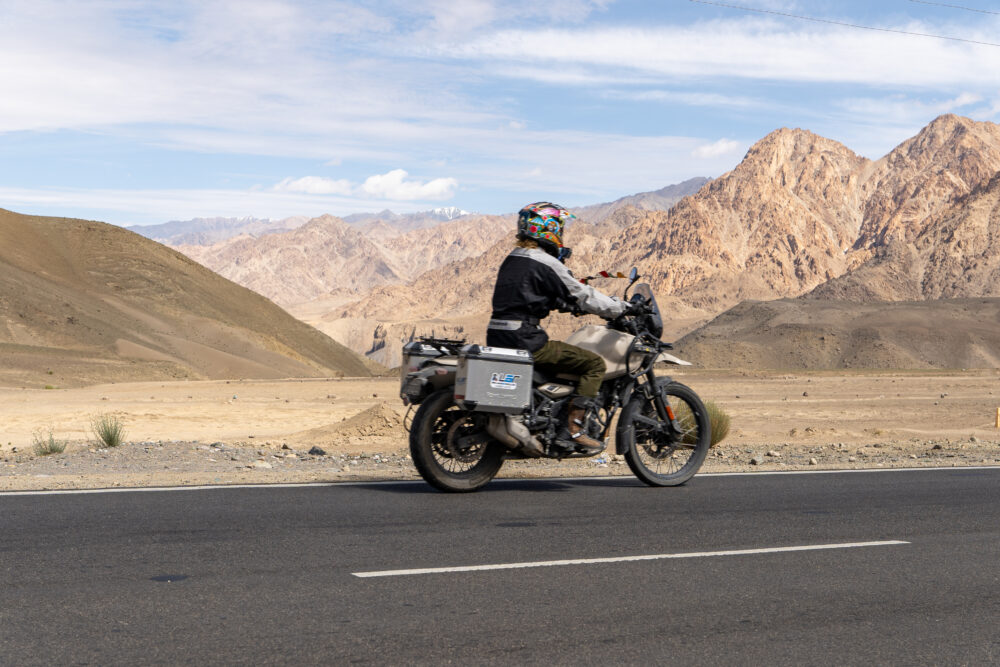
In either case, Ladakh Bike Rental is the only company I trust when it comes to tours or renting a well-maintained bike.
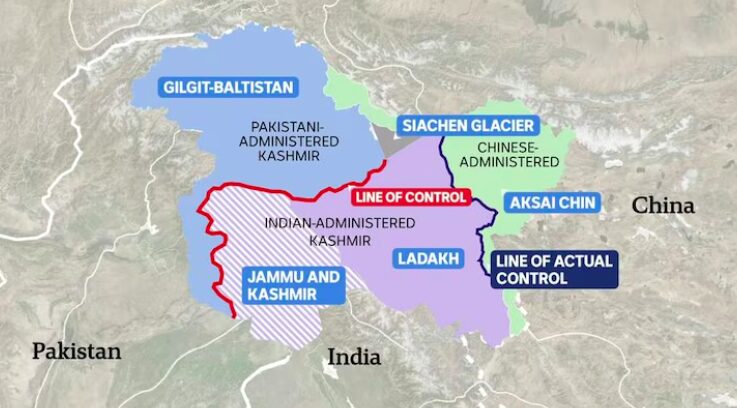
3. Ladakh and Jammu & Kashmir are two distinct states, and you’ll need ample time if you want to cover both.
My guides will all focus on Ladakh. There are no security concerns in Ladakh as it is separated from the Line of Control and the conflict between Pakistan and India. Jammu & Kashmir is where this conflict boils over from time to time, but I wouldn’t let that discourage you from visiting, as I have heard it is incredibly beautiful and conflict is still very rare.
4. Summer is not the only time to visit.
When we first visited Ladakh, I was under the impression that it was a summer-only destination. But that’s really only if you’re a motorcycle enthusiast traveling by land via the Manali highway. Wildlife watching is best in Feb/March for most of the sought-after species, and it’s actually a popular year-round travel destination.
In hindsight, I think that April/May might be the best months for moto travel in the region. If i ever go back I will be doing it during this time frame.
5. Many of the roads are paved as of 2025.
This doesn’t always make them easy. I will share which roads are dirt for all of my itineraries.
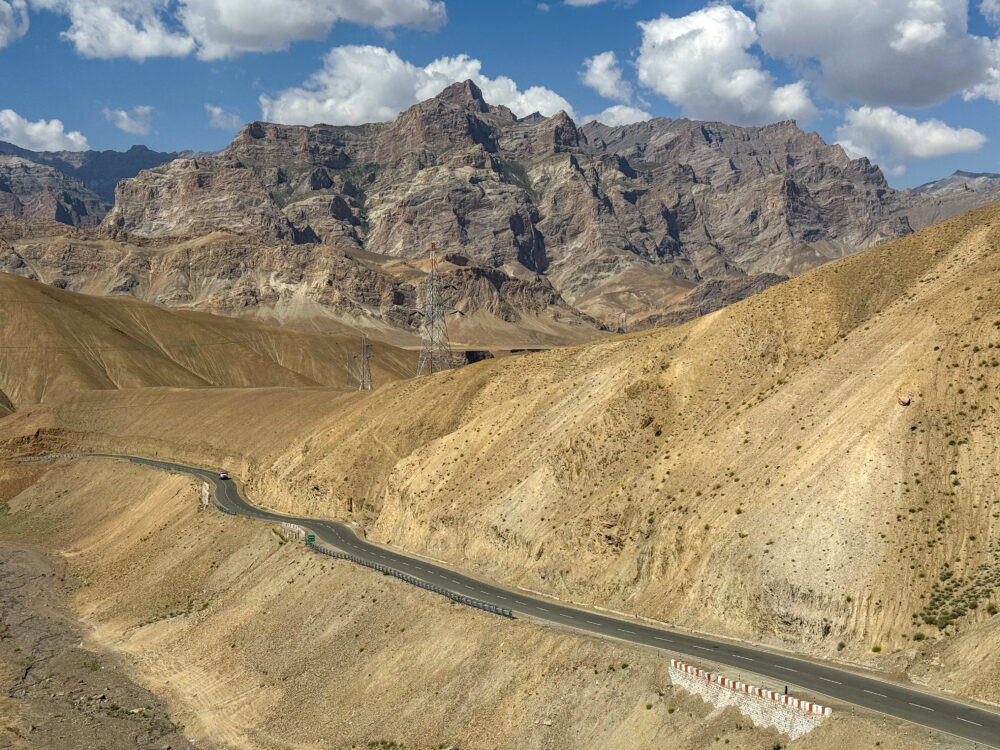
There is usually only one road, and it was always on offline maps like Maps.me or Gaia. In fact, we often just used Google Maps to get around. Unlike our previous travels in places like Mongolia, you don’t really ever have to worry about getting lost.
Now that we’ve gotten that out of the way, let’s plan your Ladakh motorcycle trip.
Essential Information When Planning Your Ladakh Motorcycle Trip
Before I jump right into my Zanskar Valley moto itinerary, let’s dig into some of the trip planning components that will keep you out of jail and sweeping past all the roadblocks in the region.
1. Group Tour or Go It Alone
This is the first decision you will make when it comes to booking your Ladakh Trip. It’s also arguably the most important. I can’t make this choice for you, and obviously, both have their merits depending on your experience level and the kind of traveler you are.
Reasons to Go Alone
- You have lots of experience riding a motorcycle. A geared one.
- You are on a tight budget. You can usually get a reliable large (450cc) bike for around $43 per day.
- You aren’t interested in the social component and would rather stick to your own timetable.
- You want to stick to established tracks and not do too much exploring beyond the pavement. I’m talking about regions beyond what is included in my blog posts.
- You are traveling in a small group or with other people that are also comfortable setting off without a guide. Traveling alone isn’t recommended.
Reasons to Join a Ladakh Bike Rental Tour
- You want insider access to fun off-road tracks and are very interested in seeing what’s beyond my blogs.
- You are traveling alone or with two people on a single bike.
- You value getting information on monasteries, towns, and cultures that you wouldn’t get on your own.
- You’re okay traveling in a large(ish) group and like the idea of having people to chat with at the guesthouses each night.
2. Choose Your Motorcycle + Company Carefully
A poorly maintained vehicle will not operate at 19,000 feet. It’s that simple. You also DO NOT want to be stranded on a cold high-altitude pass when a tire blows, when brakes fail, or a clutch cable snaps. In this remote region, scrimping on a cheap bike matters.
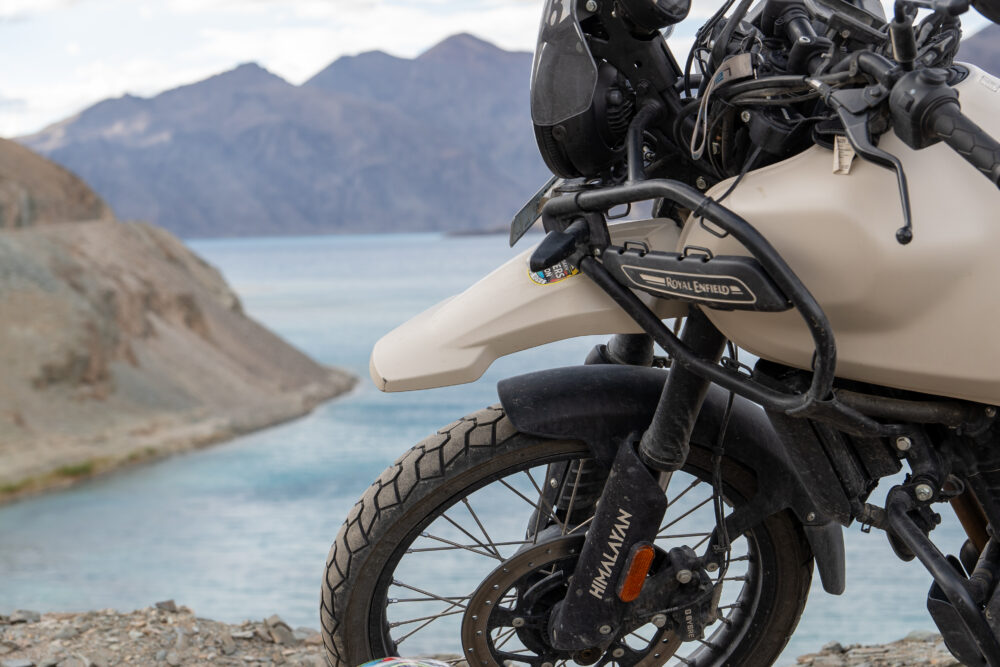
I only recommend Ladakh Bike Rental because I am comfortable with the quality of their gear, motorcycles, and service. They went above and beyond for me, helping to plan a route that we could do independently. I saw many broken-down bikes on the roads, and I was thankful that we weren’t one of them.
Be warned: As is customary in India, when a company is successful, others name their company essentially the same thing. Look for the blue logo featured on the website I linked when you are booking to be SURE that this is the company you are dealing with.
When it comes to bike choice, we went with a 450 cc Royal Enfield Himalayan because we were two people on one bike. If you are riding solo or a small human, you *could* opt for the older, smaller model. But do remember that you need a bike that can carry you over the high passes in low-oxygen atmospheres.
3. You Will Require Permits
As I mentioned, Ladakh is a heavily militarized region of India. To travel in the Pangong Region specifically, you need permits. The company you rent a motorcycle from will help you to orchestrate these on your arrival. They cost around $15 and can be set up in just an afternoon.
You will need to travel with your passport and copies of these permits at all times.
4. High-Altitude Travel Requires Acclimatization
The city of Leh sits at 11,500 ft (or 3,500m), and even traveling by road, when I arrived, I felt like absolute shit. If you arrive by air, it’s likely to be worse. But as you travel through the region, it only gets higher. Every day passes stretch up to 16,000 ft, with the highest being 19,000 ft.
You will need a minimum of 3 days in Leh before you start your motorcycle trip to avoid severe mountain sickness.
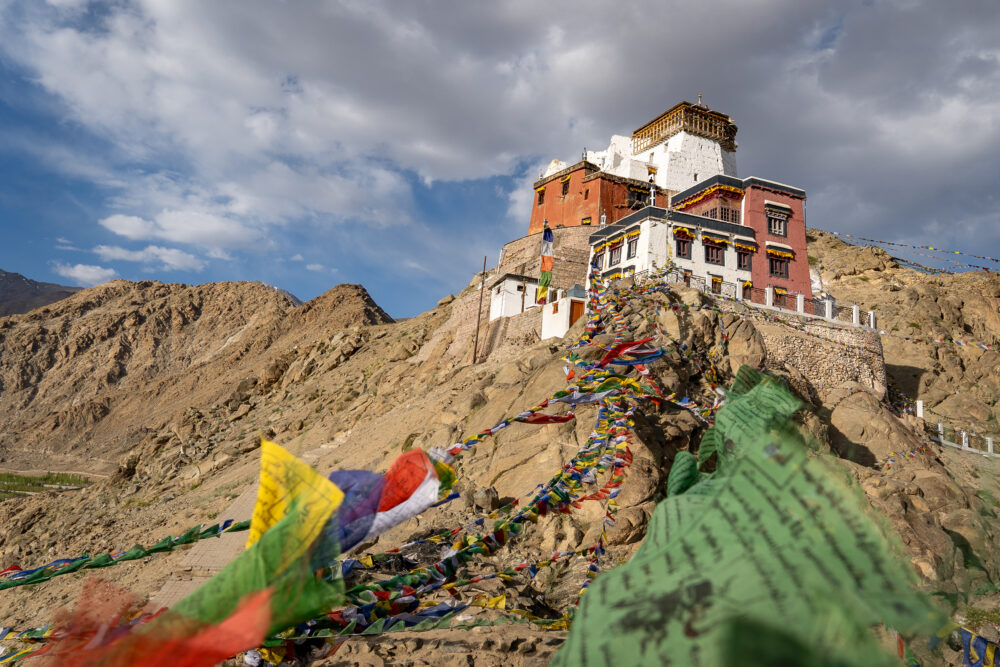
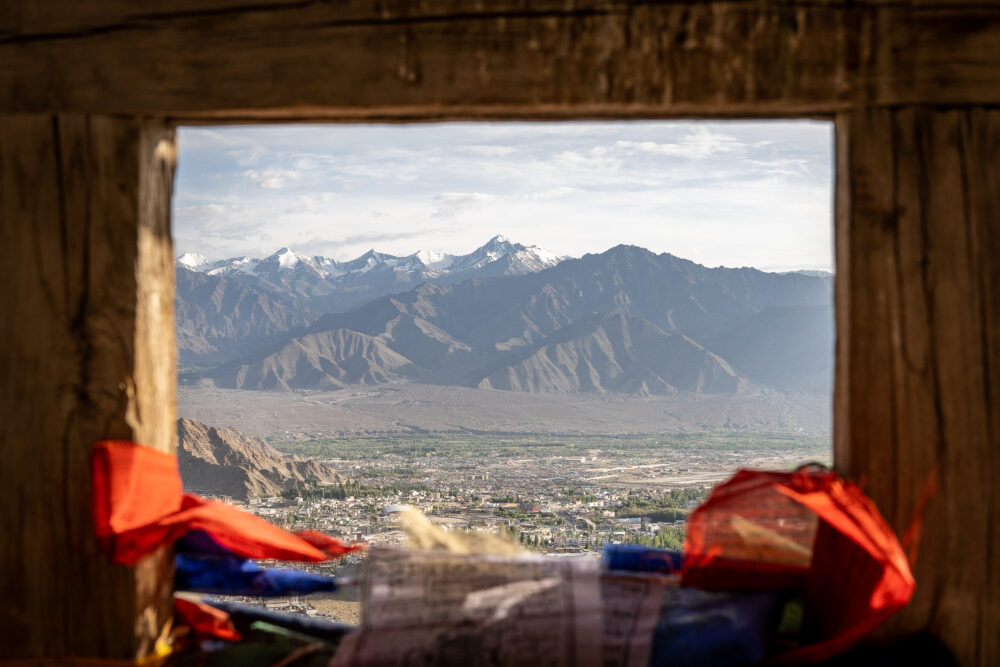
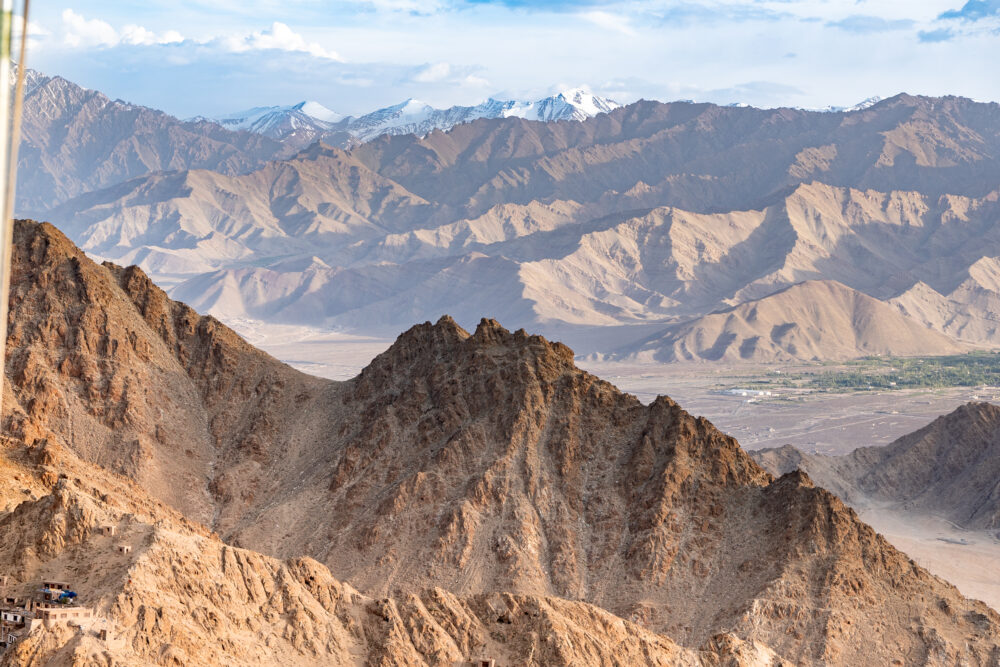
We took five and handled the altitude really well. Another key thing to note is that *if* you start experiencing headaches and fatigue, you should NOT ascend any higher. Take a day or descend if you’re sleeping high elevation to adjust. It’s also vitally important that you drink ample amounts of water (3L per day min) as you’re body uses more at high elevations.
Should You Take Diamox? Diamox is a commonly sold prescription drug that helps you to mitigate the symptoms of altitude sickness. It does not stop acute mountain sickness. If you rush your ascent, you will still feel like shit. That being said, some people do find that it helps them feel less miserable while acclimatizing at high altitude.
5. Know the Weather Possibilities
The roads in Ladakh are open from mid-June (usually) to late-September or early-October. It’s all dependent on snowfall.
Here’s a quick look at what each month usually looks like in Ladakh.
- March: Still winter in this part of the world. If you’re planning a moto journey during March, you’ll have difficulty on passes and have to deal with snow often. Expect travel delays and closed roadways at times.
- April: Arguably, the best month for moto travel, although it can still be quite cold. This is the month you start to melt into spring. Blossoms galore. The weather is very unpredictable, though, and you might still have to deal with snow at the high passes.
- May: While the Manali-Leh highway remains closed, this region really blossoms. It is a very popular time of year to visit with snow-capped peaks, so expect crowds.
- June: Still have snow-capped peaks and a mixture of hot/cold weather while staying relatively dry. The big issue is timing your trip when the road will for certain be open.
- July: Peak season, hottest month with temperatures soaring to nearly 90 degrees at times, lots of water crossings as the glaciers melt. Many local festivals.
- August: Another month of hot temps but less glacial runoff. This is a very popular time to travel despite being in the thick of monsoon season. Rain isn’t frequent, but it is a bigger possibility.
- September: Expect nearly no water crossings and very cold temps. You could also get snowfall as the month progresses.
6. Leh Will Function as Your Home Base
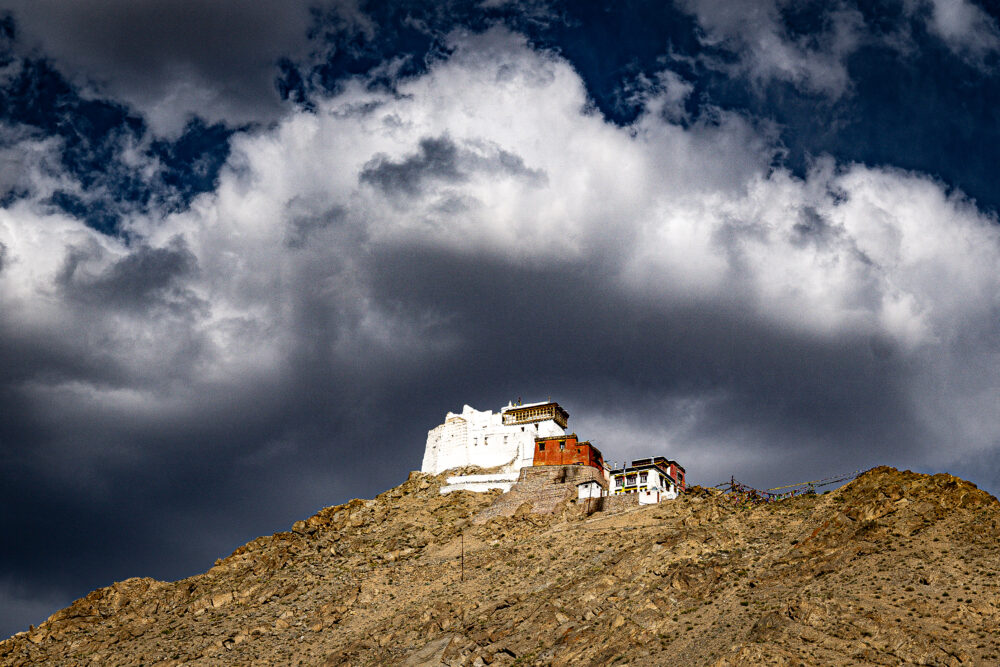
I loved the town of Leh. You’ll likely get to spend quite a lot of time there depending on your itinerary. I recommend hitting most of the main attractions of Ladakh in two loops with a short break in Leh in between. I’ll get to all that later in the itinerary portion.
7. Always Bring the Ladakh Essentials
Once you hit the road, you’re not going to find convenience shops and restaurants in between towns. It’s just you and the freshly poured pavement. So it’s vital you go into each day prepared.
- Prayer flags on the handlebars. This is a Ladakh tradition and is a wish for a safe journey.
- Sunscreen. You are on the roof of the world, and sunshine is HOT and strong.
- Repair Gear. If you’ve gone ahead and booked with Ladakh Bike Rental it will be provided.
- Snacks. We liked dried fruits like Mango, which you’ll find in abundance in Leh.
- Water. Lots of it. We never traveled with less than 2 L per person. Assume you won’t have any until your destination. Having a Lifestraw Water bottle would be great.
- Offline Maps.
- SIM Card. More on that below.
- Protective Motorcycle Gear. I hope I don’t have to say this, but you need a protective jacket, a proper helmet, and thick pants, if not full moto gear, for this ride.
8. DO NOT, I repeat, DO NOT bring a Garmin GPS or Sat Phone of Any Kind
I cannot emphasize this enough. India does not allow Garmin devices or any satellite phones in the country.
Fortunately, we just got our Garmin seized. But other travelers recently (and one we met on this trip) were arrested and charged with possessing the device at the airport when entering India. They had to then appear in court in Delhi a few weeks later and risked jail time. It’s a huge deal. Just leave it behind on this trip.
Yes, it’s an absolutely bonkers, stupid rule. But nothing you can do about that.
9. Start Your Day Early
There are a couple of reasons for this. First, if you’re traveling in the early part of the season (June/July) snowmelt is a major concern. Throughout the heat of the day, the glaciers melt, and the nighttime snow melts from the peaks, flooding rivers. All water crossings become totally impassable by 4 PM. You need to reach where you are going before that time.
The other major reason is that sometimes things go wrong on the road, there is construction, or you just generally take longer than you think due to many photo stops. This is why it’s always best to be on the road by 7 AM.
10. No Need to Book Homestays in Advance
The only places that fill up in advance are the high-end ones. If you’re planning on staying in guesthouses (which I highly recommend), it’s best to book upon arrival. The truth is, you never know if you’ll make it to the town you intended to, and this way, you can be more flexible.
To find the best homestays (aside from reading this blog), I highly recommend using Google Maps rather than booking platforms, as 99% of them are not listed on Booking.com or Agoda.
11. Get Your Airtel SIM in Leh
There are only two SIM networks in Ladakh. Airtel works the best and is easiest to get set up. You’ll find it in Leh town square. You will need to bring your passport.
If you get a SIM card outside of Leh/Ladakh during your travels through India, it will stop working in Ladakh.
You need to get it here, as they do something to register it with the military. A SIM is vital for traveling out here, and Airtel actually had excellent coverage, so we felt more comfortable traveling independently in case of an emergency.
12. A drone is allowed in Ladakh
I saw conflicting information on this, so allow me to clear it up. Drones are allowed in Ladakh. There are clearly posted signs near all military installations where you are not allowed to fly, but you’ll have no problems using it anywhere else.
Do keep in mind that predominantly Muslim communities like Kargil and Turtuk regard drones with more suspicion, as they don’t want themselves photographed. So always be respectful.
Day Trip: Dip Your Toes into The Zanskar Valley With a Quick Trip in Hemis National Park
If you’re looking for a quick foray into the canyons, but don’t have time for the full itinerary below (maybe you’re opting for my Pangong Lakes and Nubra Valley Loop instead), this is the perfect day trip from Leh.
This is also an excellent opportunity to practice on your bike if the model or terrain is new for you. I recommend this as a day one ride as it isn’t treacherous, there are no passes, and you remain at Leh’s 10,000-11,000-foot altitude.
The Ride: Leh to Chilling
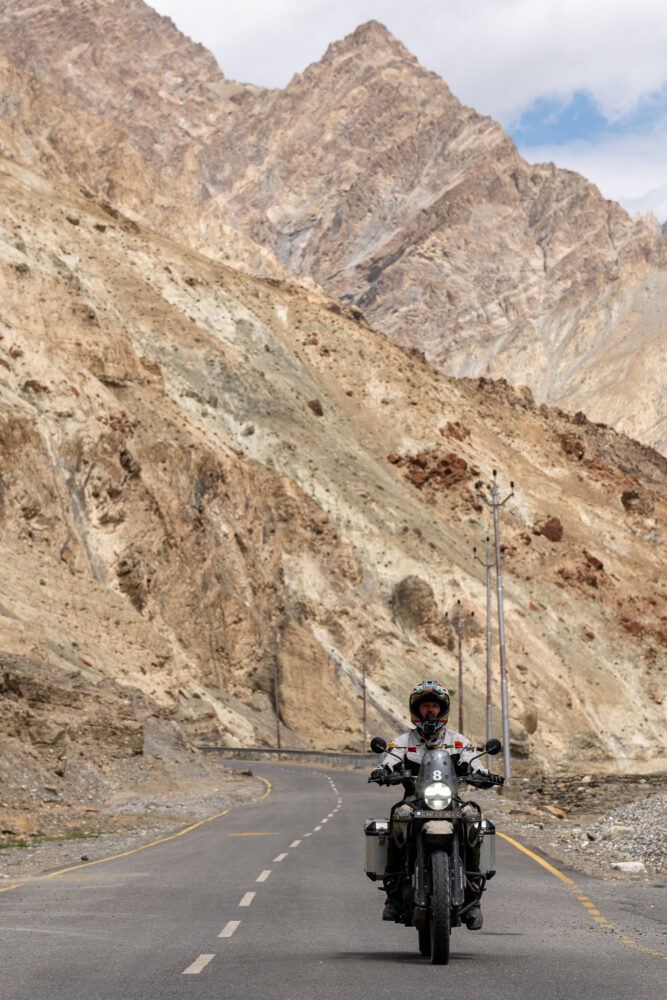
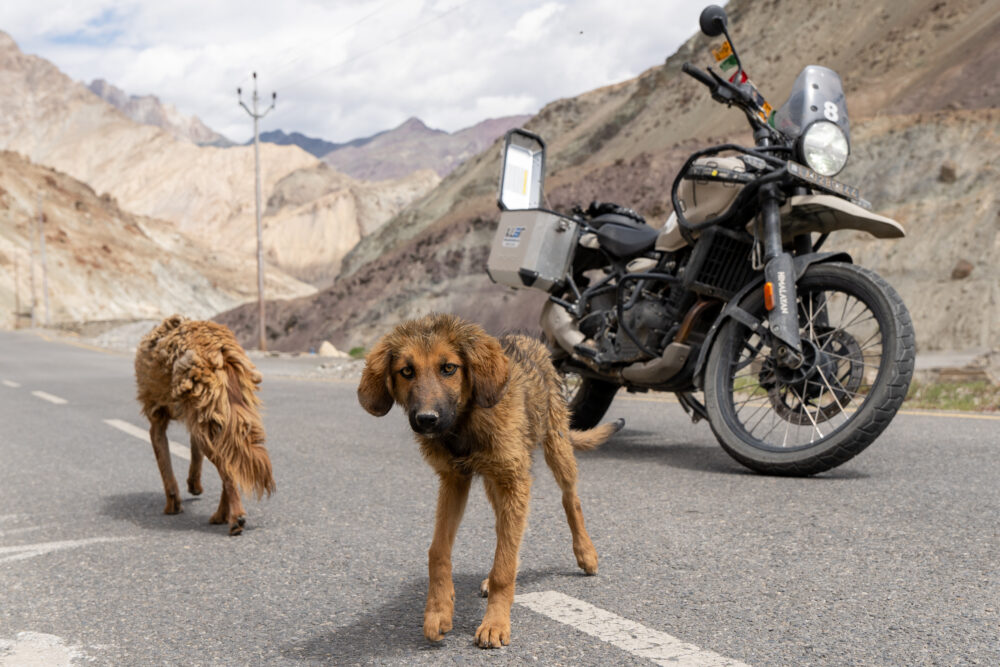
This 60 KM ride is 100% paved, on Google Maps, and snakes from the city center to the confluence of the Zanskar and Indus Rivers and dips into the purplest part of the canyon. While one day, this nice road will connect with Padum deep in the valley, as of 2025, it does not. And it has a long way to go. It will take around 1-1.5 hours to reach the end of the road from Leh, and there are plenty of worthwhile photo stops along the way.
This area, despite its remoteness, is also becoming something of an adventure tourism destination. You’ll see the drop in spot for both bungee jumping over the Zanskar River and White Water Rafting as you drive this direction.
Ladakh Motorcycle Itinerary: Zanskar Route
FINALLY. Without further ado, here’s the information you really came here for.
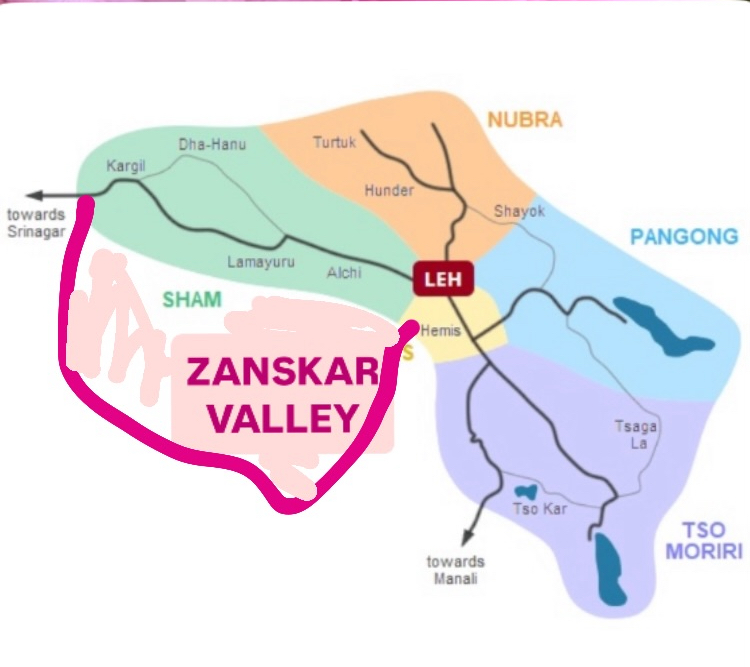
I’m going to share two detailed loops in separate blog posts. This loop is more technically challenging with a few passes and fewer paved roadways (for now), but it stays relatively low for Ladakh in terms of elevation and high passes. For this reason, we chose to ride this loop first to give us more time to acclimatize to the high altitude.
Read More: If you’re looking for my other Ladakh motorcycle route, you can find it here.
Day 1: Leh to Lamayuru
- KM to Travel: ~140
- Noteworthy Passes: No noteworthy passes. Highest elevation of about 12,500 ft.
- Sleeping Elevation: 11,400 ft
- General Road Conditions: Smooth paved roadway until you take the deviation off the highway to Likir Monastery. This village route parallels the main road and is mixed (50/50 as of 2025). Expect construction to be in progress.
While today is an “easy day” on this route, it will also likely be your very first day on the roads in Ladakh, so it’s important that you get an early start. You could take a wide paved highway the entirety of the route today if you found yourself in a hurry, but you would miss all the best sights. Instead, I suggest taking the main road out of the city all the way to the Likir turnoff, having a quick roadside chai break (roughly here), and then continuing on the much narrower and more scenic road that will eventually spit you back out on the highway at Nurla.
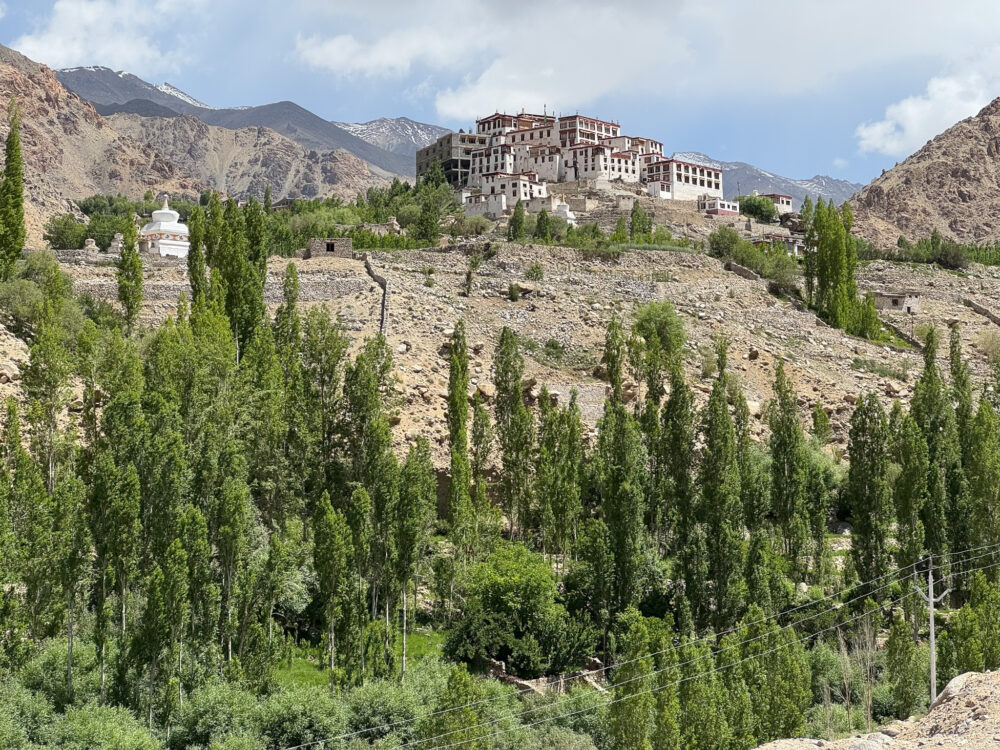
Keep in mind that to reach Likir Gompa or Likir Monastery (I highly recommend), you will have to do a short, paved out & back route. Give yourself enough time to explore the monastery when you reach it. It’s one of the more impressive ones.
Checkpoint: You will reach your first checkpoint today in Khaltse just before you arrive at the day’s end. Be sure you have your passport and permits readily available, and go fill out the booklet inside the checkpoint informing them of your travel plans.
You’ll be contending with traffic for most of the day today, aside from the village route. Be sure to stop for lunch at the Punjabi restaurant in the petrol parking lot and fill up on petrol here as well. There is also a town just ahead of lunch if you want more choice, but honestly, this place was delicious.
Sights Along the Way
- Magnetic Hill. Idk, something to do with looking like your bike rolls uphill with gravity?? It always had loads of people around.
- Zanskar/Indus River Confluence. You’ll pass this roadside stop, and it’s a good point to stretch your legs.
- Likir Monastery. A must-see.
- Scenic Village Route.
- Moonland. An odd roadside landscape as you enter Lamayuru.
- Lamayuru Monastery. Your evening plans upon arrival. Well worth the uphill walk.
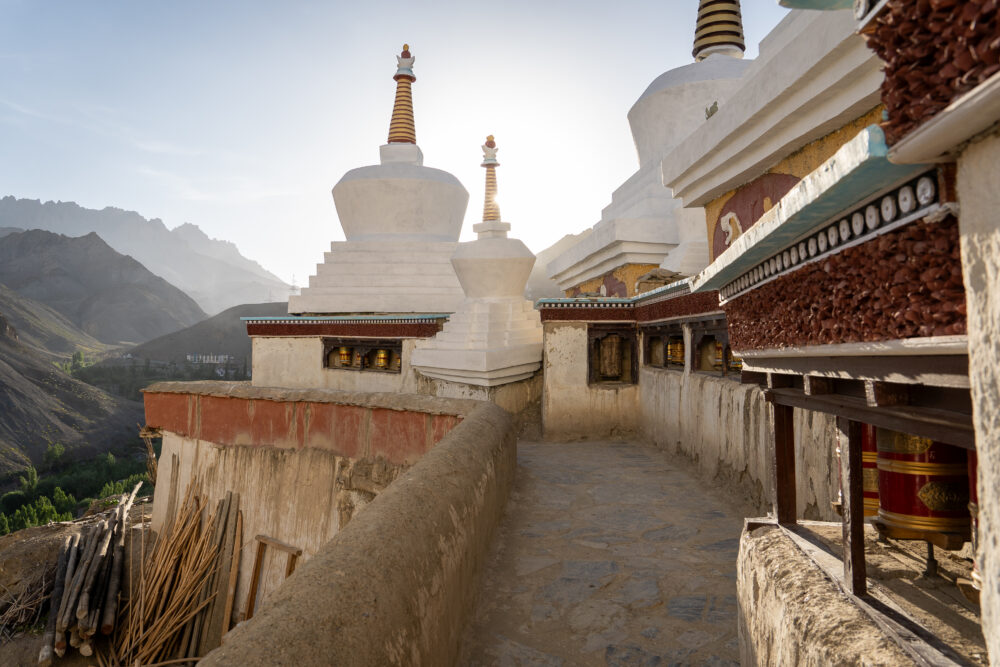
A note on the scenic village route: As of 2025, this route is undergoing construction and asphalt is in the process of being poured, although not completely yet. If you’re reading this in the 2026 season, it may be done! If not, it’s still definitely traversable.
Where to Stay in Lamayuru: Dragon Guesthouse
Having completed my moto loops in Ladakh, I can now say with certainty that this was the best bang for your buck place to stay. It most definitely had the best home-cooked meals (which were included in the price) as they just kept bringing piles and piles of Indian food to our table. Curries, papadam, and so much more. It’s also located at the foot of Lamayuru Monastery, which is an absolute must-visit for sunset. We could easily walk there. Another perk was fresh ginger herb tea from the garden and secure parking for the bikes. You will not regret booking your stay here. I promise.
Day 2: Lamayuru to Padum
- KM to Travel: 185
- Noteworthy Passes: Sir Sir La (15,700 ft) & Singe La (16,250 ft)
- Sleeping Elevation: 11,500ft
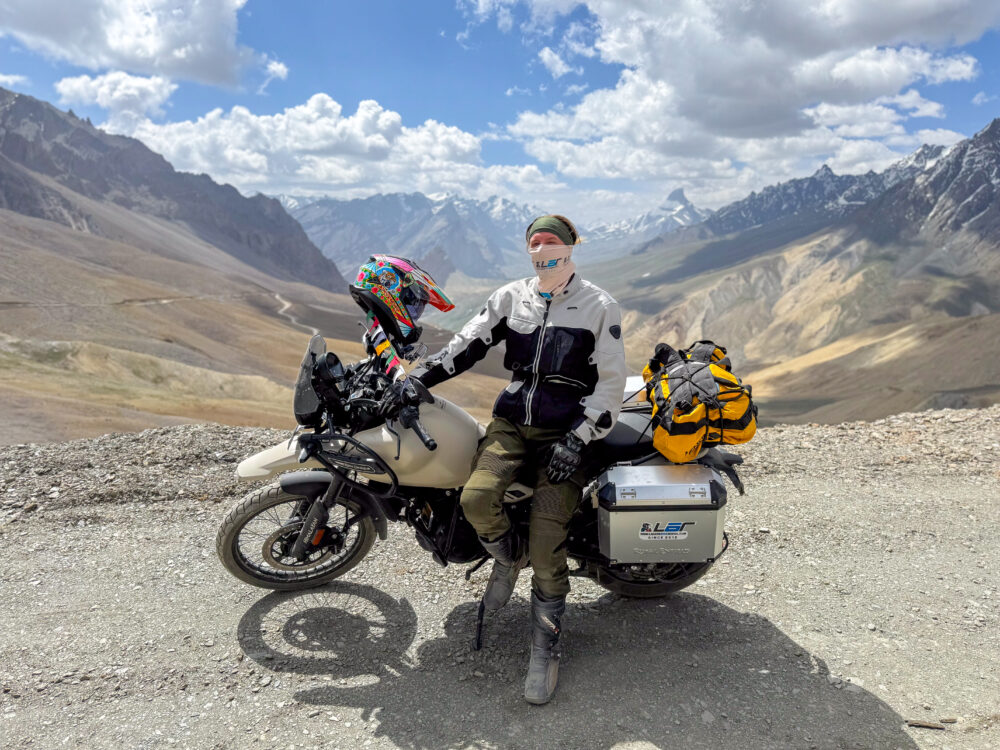
- General Road Conditions: Shit. Generally, it’s shit. Absolutely, stunning, beautiful, breath-taking…but it’s about 50/50 the whole time (some pavement, mostly on the big passes) and a lot of the bad is super super steep and/or shale. Today took us a determined 10 hours.
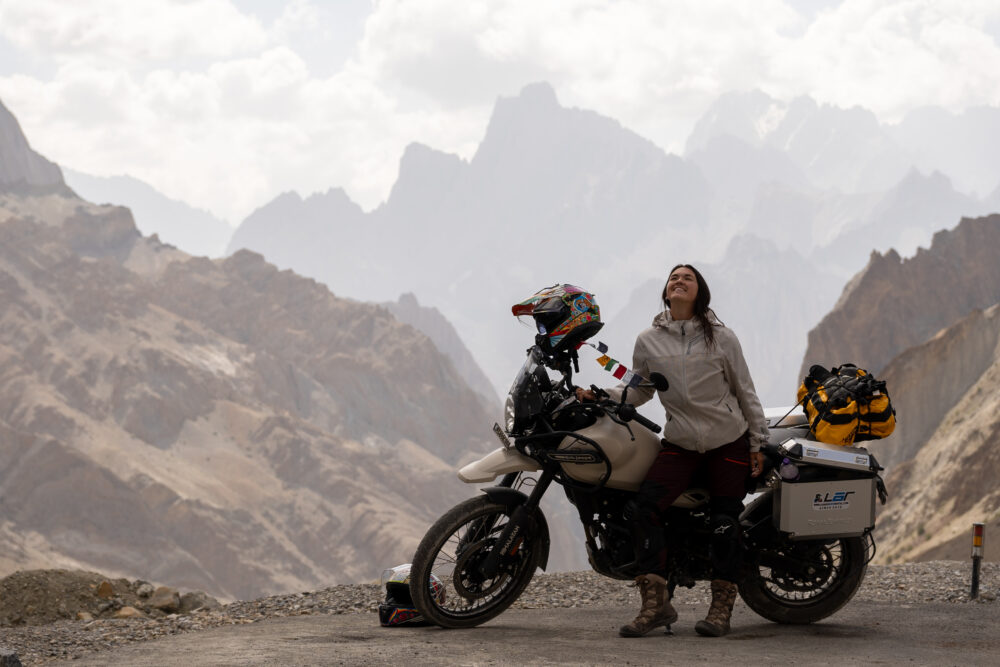
The start of today involves just a touch of backtracking as you head toward Sumdo via Wanla. This portion and the first chunk of road toward Sir Sir La will be paved and glide through STUNNING canyons. Get your camera ready for this first hour or so. The route will be very straightforward from this point if you are using maps.me. The only important turn is to head toward Yulchung rather than Lingshed/Lingseed. Yes, the road to Yulchung looks steeper, dirt, and has an insane number of death-defying switchbacks that are just a pleasure to try to navigate down…but I promise it’s better than the alternative.
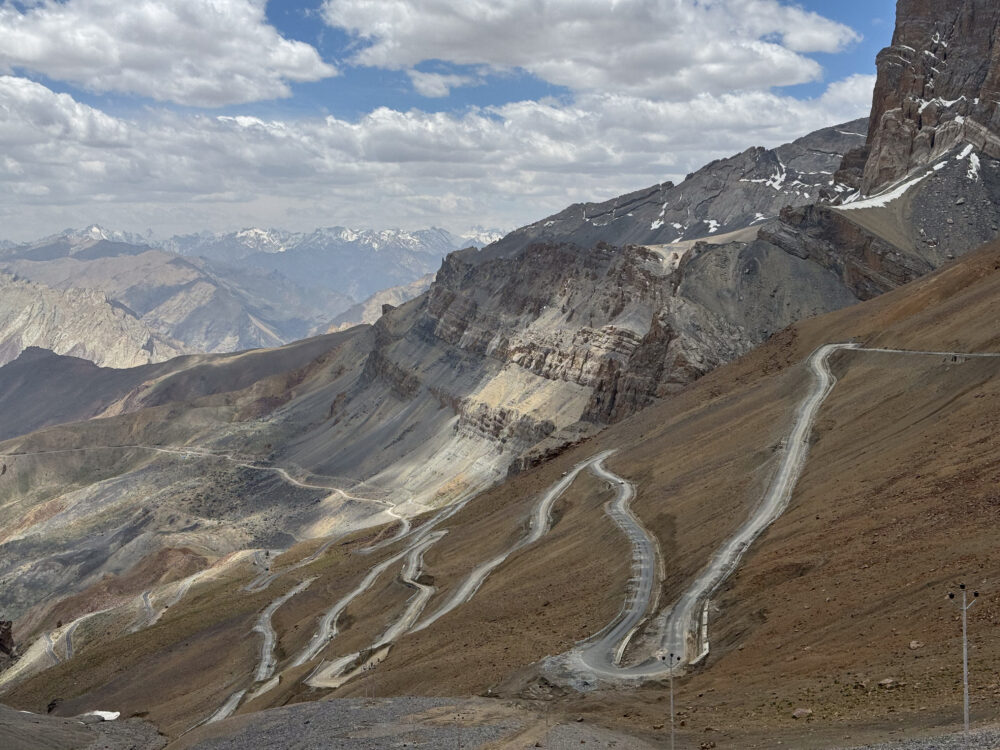
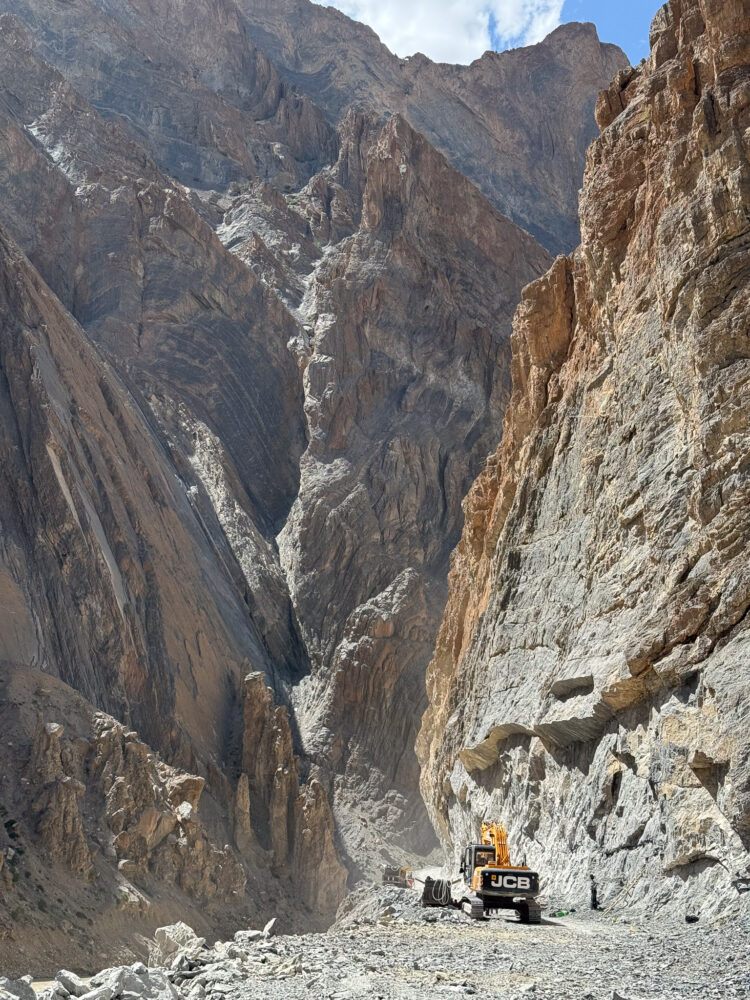
From Yulchung, continue on to Nyeraks. This is your stopping point for the day. You don’t have to climb the switchbacks into town, just grab a bite at one of the roadside chai shops. This area is super dusty and an absolute menace for construction, so be sure to watch for landslides. We almost got taken out by one here. While the road looks like it will be much easier from here, that’s a map lie. Here’s where the shale, roads scooped out of a cliffside come into play as you follow the narrow river canyon along to Zangla. This is where the majority of the construction delays will be as well. From Zangla, the road is paved to Padum and you’ll have time to stop and fill petrol past the windy plains right before you enter town.
Construction: Part of the reason today takes so long is construction. The stretch of road that follows the river before reaching Zangla is a blast zone with regular delays as they dynamite and then clear the road. We were lucky to only have an hour and a half or so but sometimes the delay can be catastrophic. Bring snacks and leave early.
Sights Along the Way
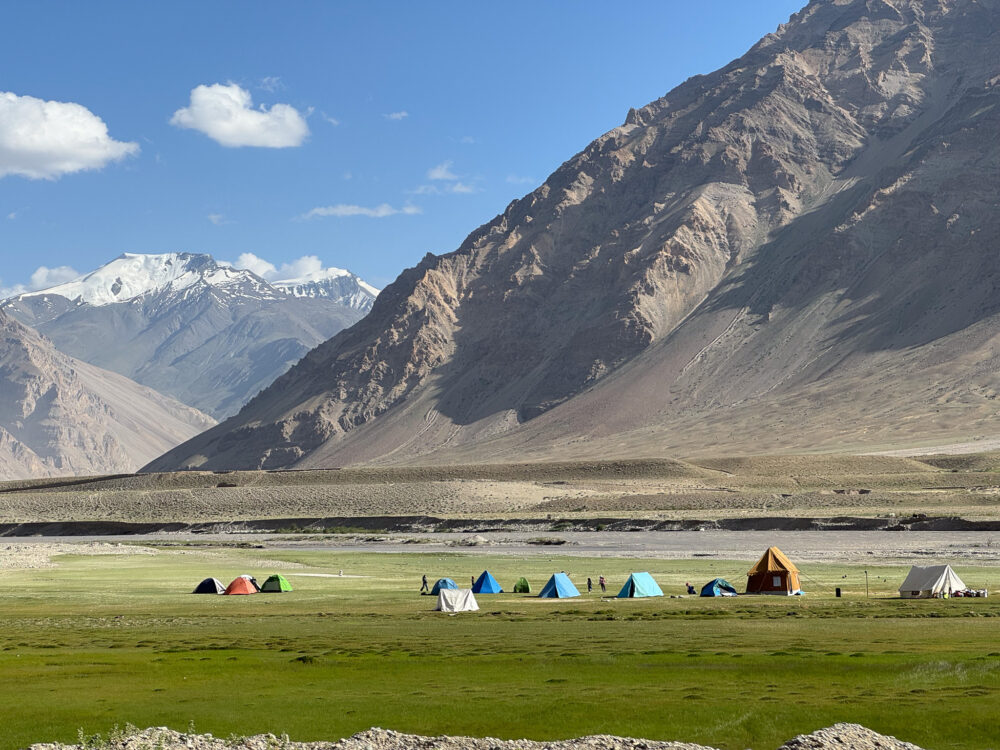
- Literally everything. But nothing that’s a must-stop outside of whatever views you want to photograph along the way. It’s all incredible and probably the single prettiest day on the trip.
- Mandatory chai stop post white-knuckle passes. The town of Nyerak has one of the only chai shops and general snack stops on this entire route.
- Padum. I loved Padum and was happy to explore the town. My favorite spots included Padum Gompa, Karsha Gompa, and the city view near Namkha Resort.
Where to Stay in Padum: Konka Guesthouse
The beds are…firm, but the host and his enthusiasm more than make up for the slight discomfort. Also, you’re in a really remote area, so it’s likely this is the standard. Konka is quiet, comes with breakfast + dinner, and the host loves to share info and recs with his guests.
Where to Eat in Padum
- Vaishravana Restaurant & Cafe. Amazing food in a simple setting with a nice view.
- Chamling Kailash Bar. The only place to get beer/liquor in town. Not to be a delinquent, but it’s nice after a long ride like that. Also, it says closed, but it’s not. Beer is a rarity, though.
Day 3: Padum to Purne
- KM to Travel: 54
- Noteworthy Passes: None.
- Sleeping Elevation: 12,500 ft
- General Road Conditions: It’s lovely pavement until Reru, then it slowly starts to taper off and mix with dirt and construction until Anmu, where it becomes a new paved road. You will have water crossings today. In the morning, they are minor.
An absolutely lovely ride that takes you out to what is probably Ladakh’s most impressive monastery. Phuktal Gompa. Do not miss this. It does involve a little bit of a hike, but they are actively extending the road to make it easier and easier. As of right now, you follow the road all the way to Purne, do not turn before town, I repeat, DO NOT turn before town.
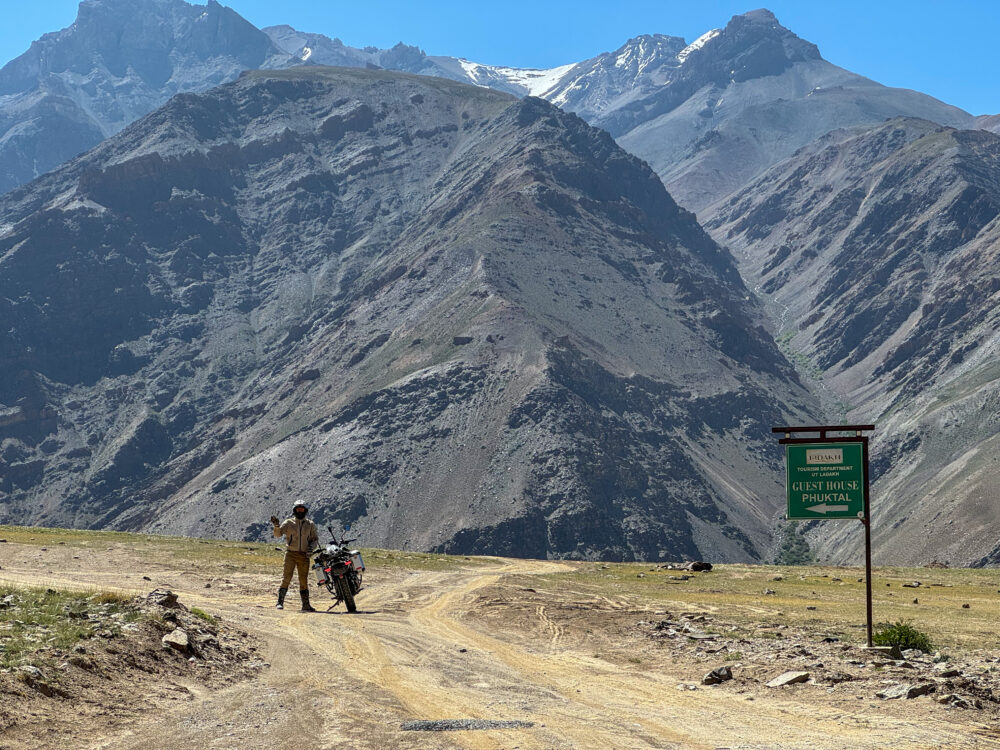
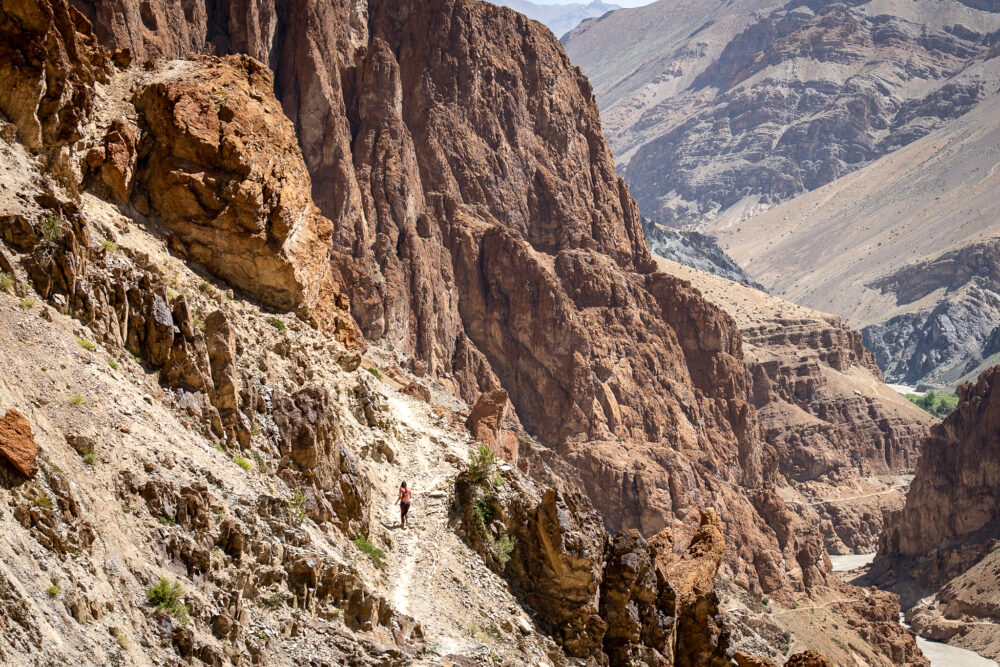
If you take the wrong road, you’ll end up 1,000ft up the side of the canyon wall on a death road that does not go to the monastery.
If you go all the way to Purne and then take the left, you’ll travel alongside the river until you can no longer do so. Park your bike, secure your belongings, and then walk across the bridge and the 2-ish miles to the monastery. It’s worth it.
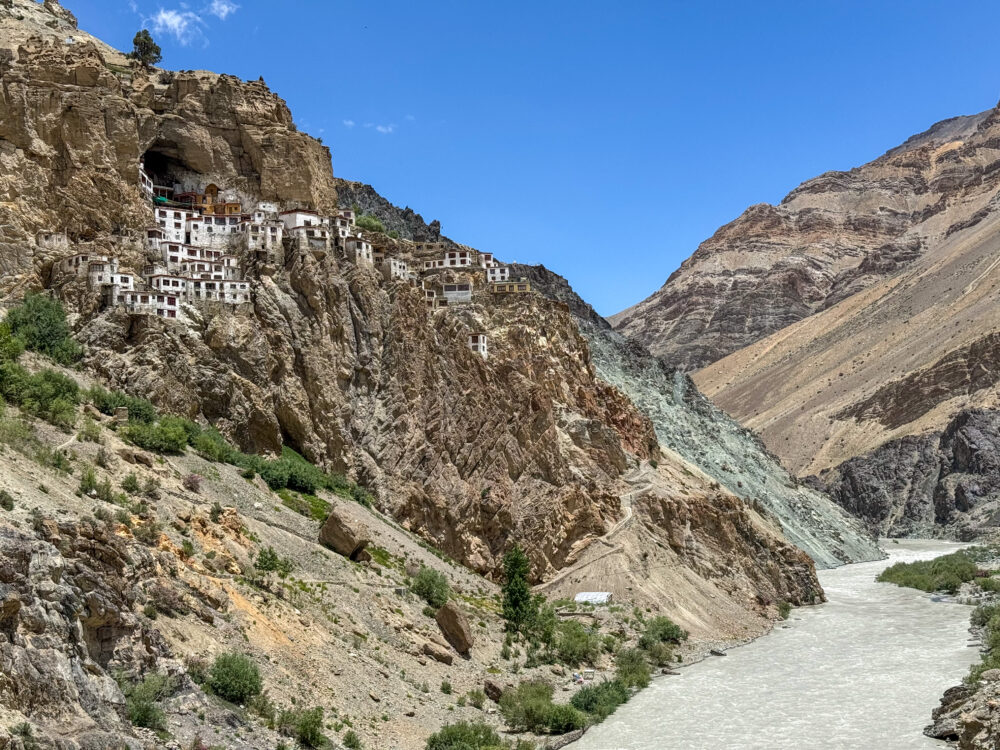
Tempted to go back to Padum: You *could* go out and back in a single day. But if you do this, you should leave at 5 AM so that you reach Phuktal monastery with plenty of time to hike to it and explore. The monastery is TOTALLY exposed to the sun, and the trail gets quite hot. You will need 3 hours for the hike and to see the monastery minimum. This is why it’s better to stay overnight and go early in the morning from Purne. But admittedly, this is a much more leisurely pace.
Where to Stay in Purne: Nurbu Homestay
Purne doesn’t have many options. This is the most comfortable and convenient. But even here, expect intermittent power and no wifi.
Day 4: Purne to Padum
This will be the same route you took on day 3. I recommend you explore the monastery early morning and then drive the way you came back to Padum, being sure to make it before 3 PM (if possible), as the water crossings get more and more challenging as the day wears on. After 4 PM, the crossing near Padum will likely be uncrossable.
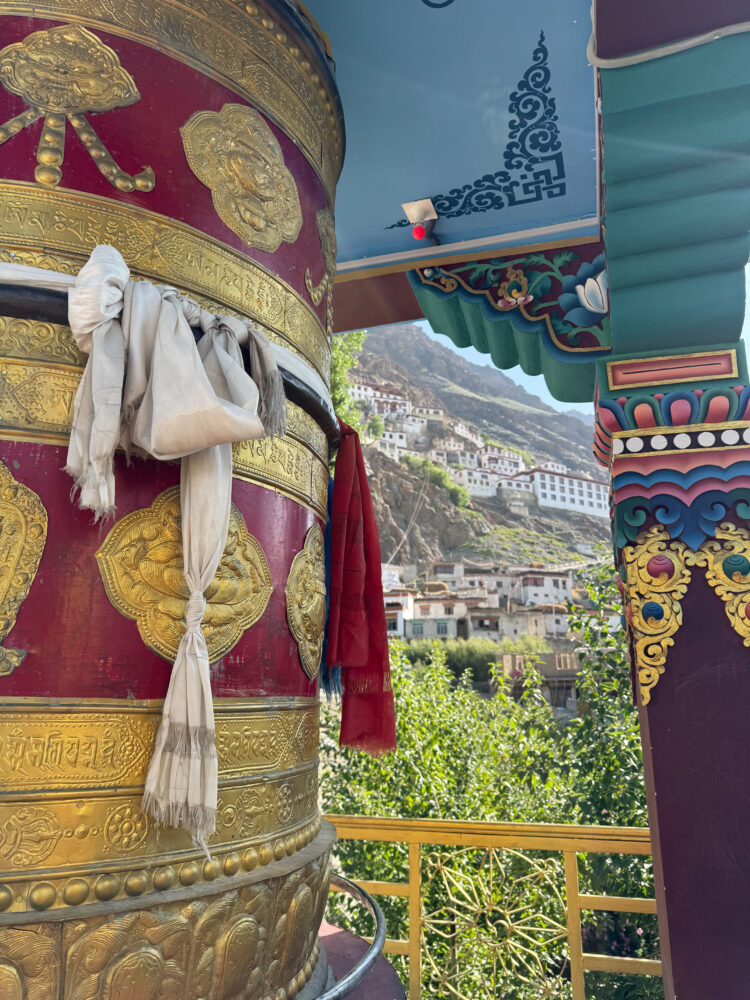
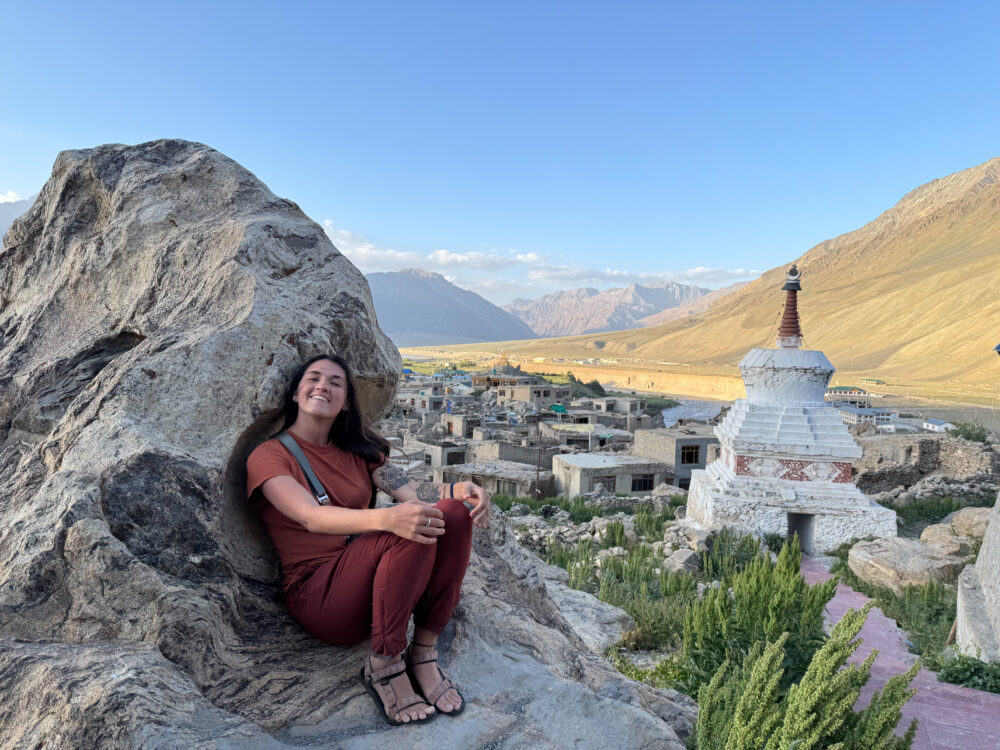
Water crossings: This is mostly for June/July when water crossings are a bigger issue. You can always ask Ladakh Bike Rental or your rental agency if it’s something you should prepare for during your visit.
Day 5: Padum to Kargil
- KM to Travel: 250
- Noteworthy Passes: Penzi La (13,700 ft)
- Sleeping Elevation: 8,900 ft
- General Road Conditions: Pavement for most of the journey. Unfortunately, many of the town areas are not paved, which slows your day immensely. The good news is that none of the passes are wildly difficult, as they are paved and gradual.
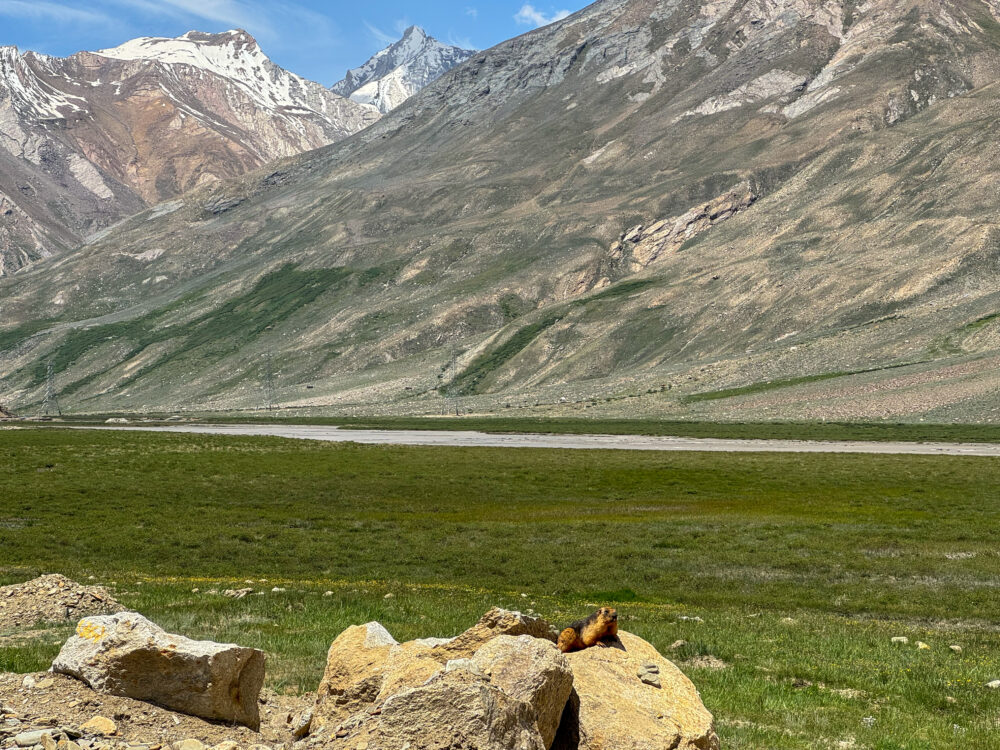
Today, you will experience a massive cultural shift. While Padum is closer to 50/50 Buddhist/Islamic, you will see the shift go to nearly fully Islamic as you approach Kargil. You’ll pass glaciers, stunning valleys, and have the opportunity to spot wildlife like the Himalayan Marmot and Himalayan Brown Bear along the way.
Sights Along the Way
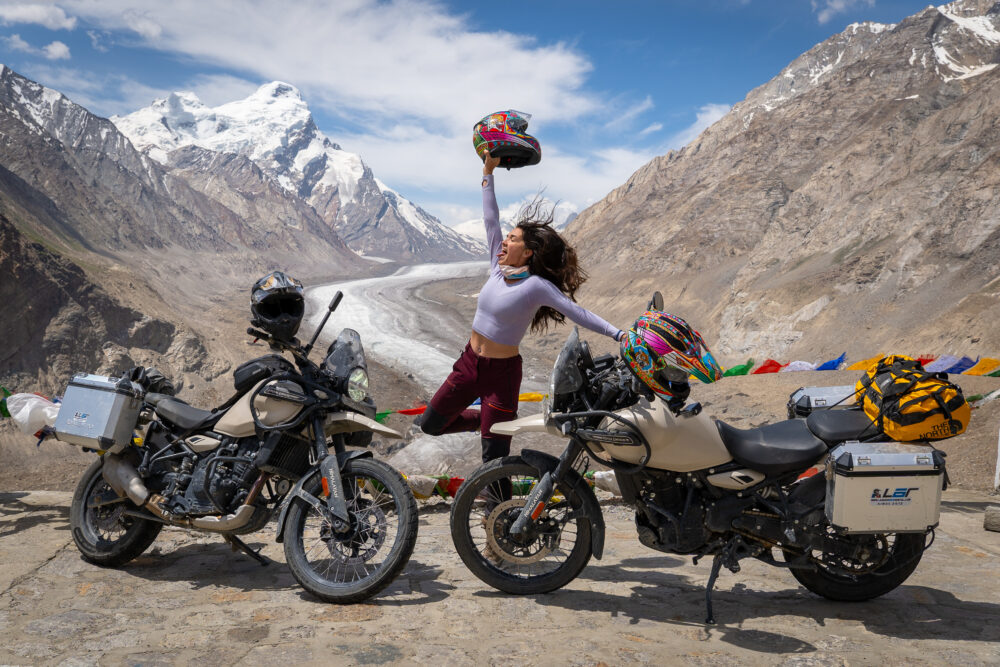
- Drang Drung Glacier Viewpoint. Stunning.
- Rangdum Valley + Tea Stalls. This is your last chance to stop comfortably for chai and snacks; it’s also a haven for marmots.
Where to Stay in Kargil: Rangyul Resort
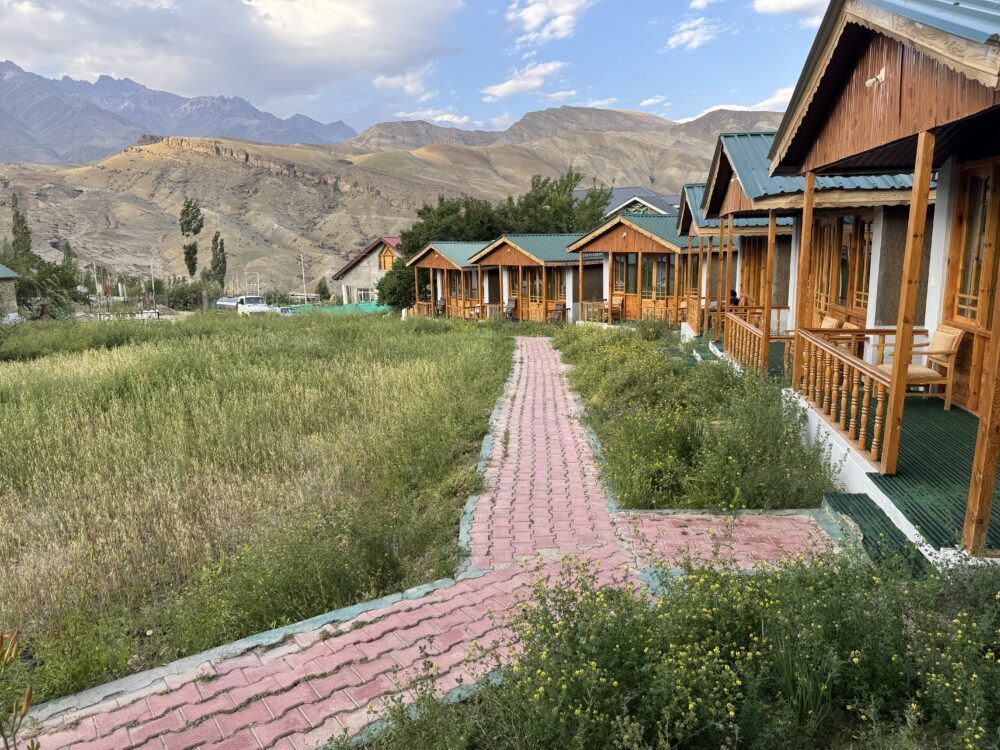
Admittedly, this is not IN Kargil per se. But it’s by far the best hotel around, and for a reasonable price. Few include meals here. You’ll enjoy the scenery, the comfy beds, and the breakfast buffet of classic Indian breakfast items in the morning (for an additional 300 or so rupees).
Where to Eat in Kargil
- Parsa’s Kargil. Best Afghan Chicken. You should get meat here. Kargil is a really meaty town. But they have all kinds of options.
Optional Route Add On: From Kargil, you are a straight shot on paved roads to Srinagar, the capital of the Jammu + Kashmir region. Many travelers have it on their bucketlist to see this predominantly Muslim state deeply embedded in the contested area between India and Pakistan. With an additional 4-5 days, I would absolutely recommend it. Srinagar is a day’s drive from Kargil, and Pahalgam is a day’s drive from Srinagar. Since I have not yet explored this region, I’m going to leave it at that and let you dive into a blog that has. While it’s definitely a possible add-on, it’s more commonly done as a bike trip all its own by foreigners.
Day 6: Kargil to Leh
- KM to Travel: 211
- Noteworthy Passes: Namika La (12,500 ft), Fotu La (13,600 ft), Both a pretty gradual.
- Sleeping Elevation: 11,500 ft
- General Road Conditions: Pavement the entire way back to Leh. About half the road will be the same road you took on day one.
Sights Along the Way
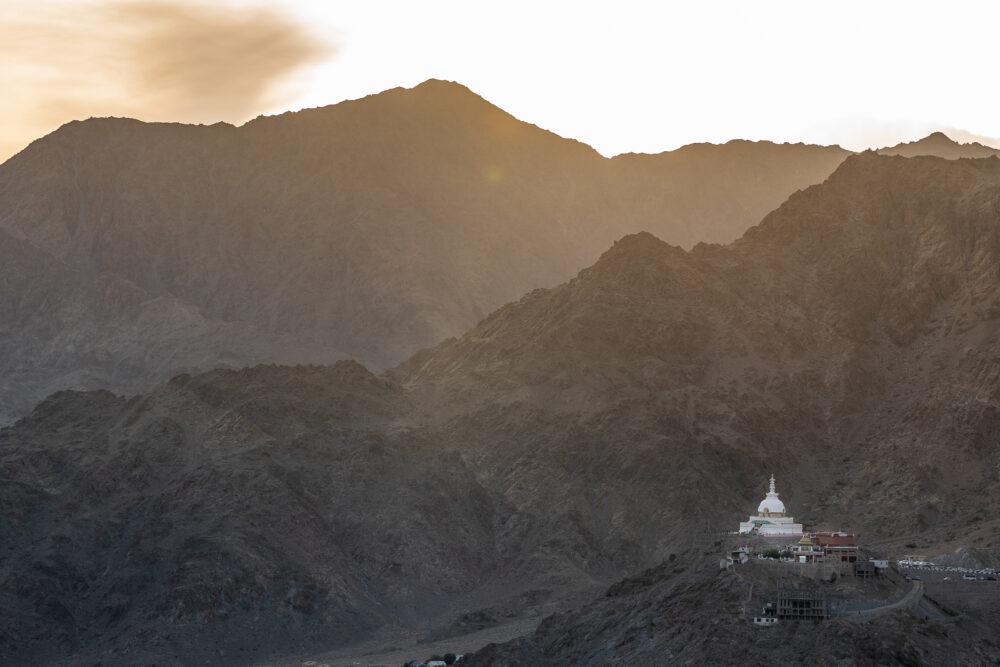
While the route today is still beautiful, you are among the tallest mountains in the world after all, much of today’s scenery will be a repeat.
Where to Stay in Leh
There is no shortage of places to stay in Leh. These were the three top choices for us.
The Courtyard Bunks ($$)
Offers private rooms + bunks, breakfast included. A little outside town, but ideal for moto riders as it is also the home base of Ladakh Bike Rental.
New Royal Guesthouse ($$)
Private rooms are super cozy + breakfast included is delicious. You even get to eat on the rooftop with a view. Also, very easy to walk into the heart of Leh.
This budget-friendly option is also super comfortable and an easy walk into town. It’s just up the road a little further from New Royal.
Map of Your 6-Day Zanskar Valley Motorcycle Itinerary
Here’s a sneak peek of what this route looks like on Maps.me. This Zanskar Valley moto itinerary focuses on the light and dark green side of the loop (the bright blue is the day trip to Chilling).
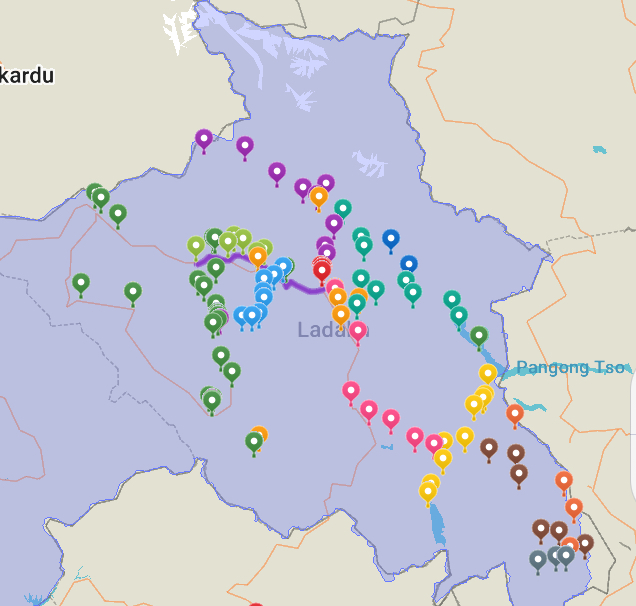
If you’re looking for my full Maps.Me file, I’ll happily provide it to you, just shoot me an email at geena.truman@gmail.com. This takes all the work out of it for you, and all you have to do is import the pins to Maps.me.
Save This Zanskar Valley Motorcycle Itinerary for Later!