This post may contain affiliate links. This just means I may receive a small commission at no extra cost to you for helping them promote their product or service. I don’t endorse any services I don’t personally use or recommend.
Welcome to the roof of the world.
As both the largest state and one of the least populous, this mountain state tucked into the far northern reaches of India hardly feels Indian at all. Ladakh is a dizzyingly high-altitude haven for outdoor and wildlife enthusiasts or just those looking to escape from the pollution and dense population prevalent throughout much of the rest of the nation. It’s my favorite place in India. Not just for motorcycling (but that is a huge attraction here), but for the culture, the cuisine, the wildlife, and the dramatic landscapes.
I’ve never been south of Mumbai in India. (Mumbai is one of my favorite food cities in the world.) A wild fact, for someone who has been to the country dozens of times, for months on end. But of the India I have visited, Ladakh is by far my favorite state in the country.
This guide will help you plan your visit to Ladakh. I’ll share with you all the interesting attractions worth seeing during your stay and why you should plan a visit in the first place. While much of this guide will center around Leh as it is the most accessible part of Ladakh (and connected by public transport to the rest of India), I’ll also cover further flung destinations in the state worth visiting if you have your own mode of transport or are interested in hiring a local guide from Leh.
When Is the Best Time to Travel to Ladakh
Mistakenly, many travelers believe (myself previously included) that the only time to visit Leh or any of Ladakh is during the summer months of June to September. But this is very incorrect. Ladakh is a year-round tourist destination. It just depends on what you are coming to Ladakh to see.
If you want a motorcycle or trekking trip…
- April + May are excellent months with few crowds; you just have to fly into Leh via the local airport.
- June to September are some of the most popular months, and the road from Manali is open for travel to Ladakh by land.
Read More: If you’re looking for in-depth information about planning a motorcycle trip to Ladakh, I have two blog posts covering the Zanskar Valley Route and the Pangong Lakes Route.
If you are hoping for snow-capped mountains…
- You should avoid June through early September when the sun melts the mountains bare.
If you are searching for wildlife…
- Wintertime is an excellent time to search for a lot of wildlife, including Snow Leopards.
- Bears and Birds are more active in the summertime when they are not hibernating or are migrating.
If you’re hoping to spend most of your time in Leh soaking in the culture and learning about the Tibetan roots here, you can really come any time of year. One of the only challenges to consider is how to reach Leh.
How to Reach Leh, Ladakh
Leh sits in a sprawling valley between the highest mountain ranges in the world. The Himalayas, the Karakoram, and the Zanskar. You have two main options when trying to reach this isolated state.
By Air
This is the only mode of transport that gives access to Ladakh year-round. There are direct daily flights from Mumbai and Delhi to Leh. The flight is only about 45 minutes to 1.5 hours and soars over some of the most incredible snow-capped landscapes. It’s probably one of the most scenic flights in the world.
The only catch with this mode of transport is that occasionally, due to weather, flights are delayed or canceled with short notice. I think it’s important to always remain flexible when traveling to the mountains in India.
By Road
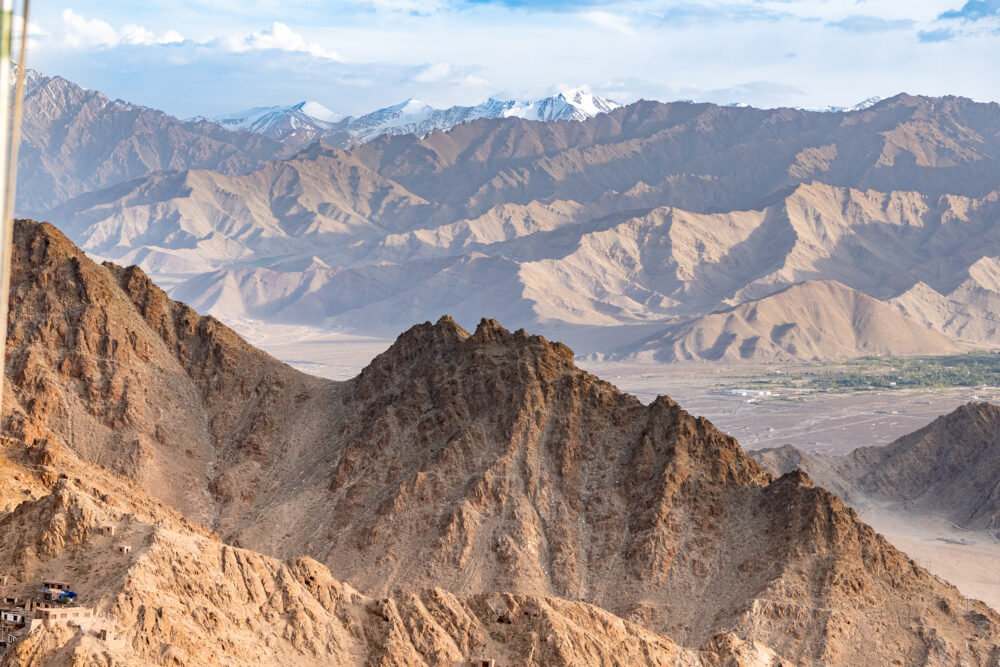
The Manali-Leh Highway is a scenic and slightly treacherous spit of roadway that connects Leh to the rest of India. It traverses five high-altitude passes (Rohtang La (this one has a tunnel now, so you don’t really go over it anymore), Baralacha La, Nakee La, Lachulung La, and Taglang La) and, due to the nature of high-altitude travel, is only open for a few months of the year.
In 2025, it opened for the season on May 25th and will probably close near the beginning of October. As this is typical for each year, this route is only a viable option for people traveling during the late spring, summer, and early fall.
The road itself is 500 km, and assuming no landslides or other hindrances, it can be traveled in about 10-12 hours by car. Here are your options for traveling to Ladakh by road.
Some people claim that you will have fewer altitude sickness effects if you travel by road, but honestly, we still felt like shit. Especially crossing the passes while going to Leh. There is no easy fix.
1. Motorcycle or Personal Vehicle
Before this route was laid with a long, perfectly poured piece of asphalt, it was recommended that you drive yourself. But this is no longer the case. The route is LONG and pretty boring to drive yourself. Add to that, if you are a foreigner and bring a vehicle with Manali or Delhi plates into Ladakh, that vehicle cannot leave Leh city. Which pretty much spoils all your plans of further exploration in the area.
If you plan to travel by motorcycle (or car) in Ladakh, you should rent your bike in Leh city and not in other destinations in India.
We paid 3,000 rupees per person for this option, or about $34 a ticket.
At 6 AM, a large van with 15 or so seats pulled up to the Manali bridge to load us inside and our bags carefully onto the roof. The van goes straight to Leh from Manali (with two stops for food along the way), and thanks to some maniacal driving, you’ll get there pretty quickly. Even with our two leisurely food stops, we made it in around 12 hours.
Be sure to take some meds or precautions for motion sickness on these buses.
3. Public Transport or Bus
You can score a seat on a bus for about 1,500 rupees per person ($16). But there is a catch. I mean, aside from the state of these buses. Which is not great, let me tell you. The bus leaves mid-morning and goes from Manali to Keylong and then stops for the night. You then have to pay an additional price for a hotel in Keylong (as well as your meals for the day), before continuing your journey early the next day. This means it takes FAR LONGER, and you don’t save that much at all, considering the cost of the hotel stay.
The luggage situation is also worth considering. If you have more than a single medium backpack, you’re probably going to run into difficulty on these buses.
Keylong is a lovely area, though, so it’s not the worst place to take a night and relax.
Is It Safe to Visit Ladakh?
This is probably the most common question following the tension between Pakistan and India in the Spring of 2025.
But the simple answer is YES. 100%. Life in Ladakh is very little, if at all, affected by the border skirmishes between the two countries. Ladakh borders the state of Jammu & Kashmir. Jammu & Kashmir is where the border issues bleed into. Not Ladakh. While I am in no way saying *not* to visit J & K (it too is an excellent place to visit), I am saying it is in closer proximity to the problem zones than Ladakh is.
Ladakh is a heavily militarized region of India. You will see many military bases, soldiers, and police checkpoints as you travel through the region. This does not make it unsafe. Rather the opposite.
The biggest risk in Ladakh is actually the air. Or lack thereof of it.
Altitude Sickness and How to Avoid It
Headaches, nausea, dizziness, and fatigue. These are the annoying but mostly harmless effects of Altitude Sickness. Things you will most definitely feel in Leh, which sits at about 12,000 ft of elevation. As you explore the other destinations in Ladakh, you’ll crest 19,000 ft at high passes like Umling La. This is pretty dangerous and should not be taken lightly.
Here are some important things to note because you will be fighting the altitude for the beginning of the trip, no matter what.
- Fly or drive, it doesn’t matter. You will still want 3-4 days in Leh of rest before you plan to do anything strenuous.
- Drink LOTS of water. Three liters per day per person minimum.
- Diamox is not a cure-all. It only helps you manage some symptoms if you *have* to ascend without fully acclimatizing. You can (and will) still experience the dangerous effects of altitude.
- Ibuprofen is your friend for the headaches.
- The only fix is time and rest.
- If you experience any of these symptoms: shortness of breath, confusion, difficulty walking, or a persistent, severe headache, you need to rapidly descend and seek medical care.
- Leh has very good medical centers and many hotels with oxygen if you need it.
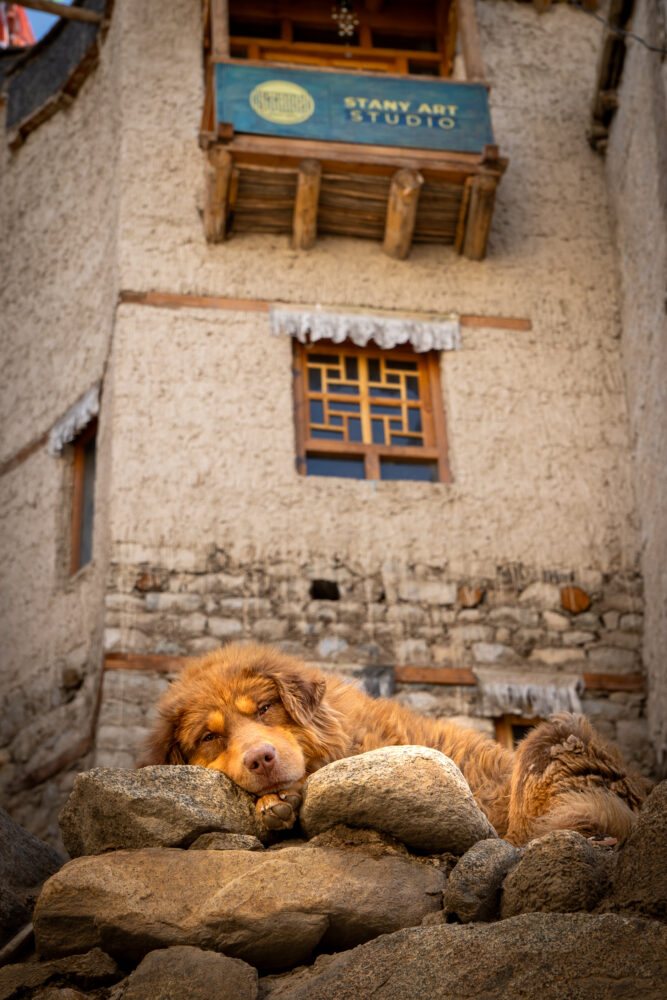
The medical centers also give free rabies vaccines, as dog bites in the region are fairly common. If you are bitten by a dog (ever), you should go to a medical center right away, as rabies is fatal and incurable.
How Long Should You Plan to Spend in Ladakh?
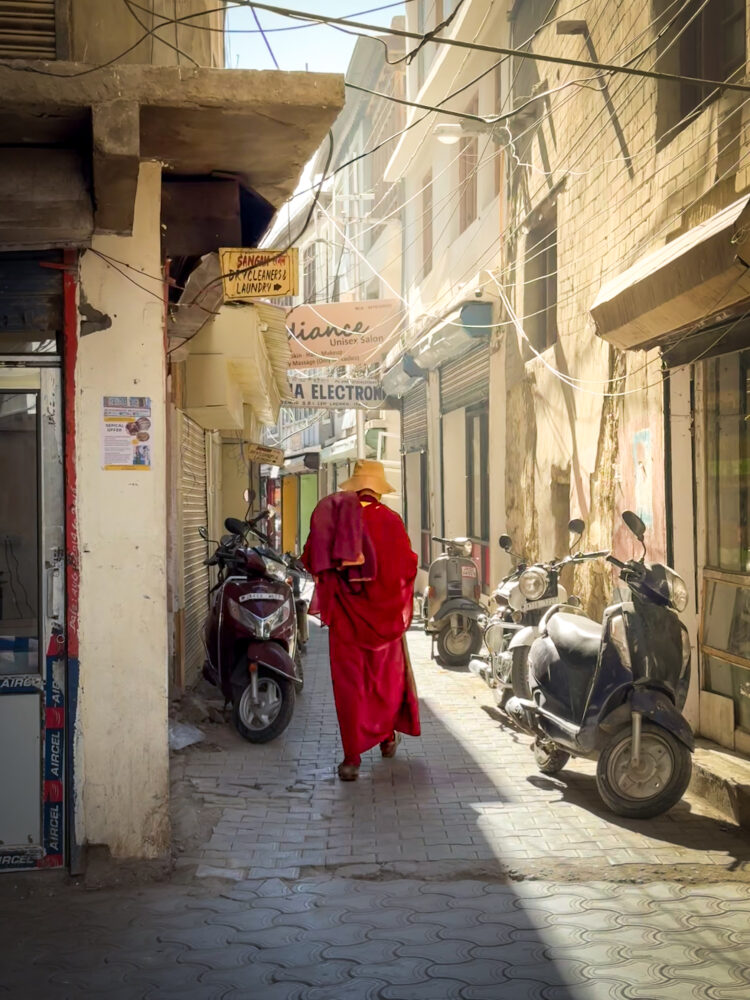
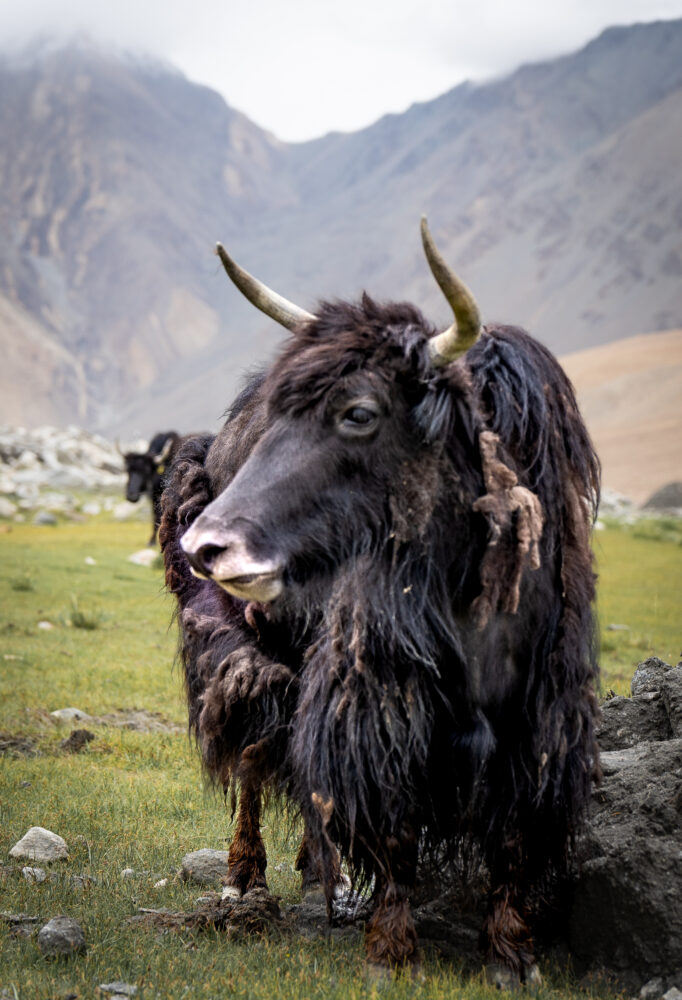
Because of the altitude, you’re going to feel like garbage for a few days at the front end of your trip. This is why, even if you aren’t planning on venturing any further than Leh, you shouldn’t bother with a trip less than one week. It’s far too much effort to reach Leh and acclimate in any shorter length of time. We stayed for nearly 3 weeks exploring the region, and I could easily have stayed longer.
Why You Should Visit Ladakh AKA Cool Things to Do Here
Now let’s talk about all the incredible things to do in this region of the world that make it such a special place to visit.
1. It’s the Top Motorcycle Destination in the World
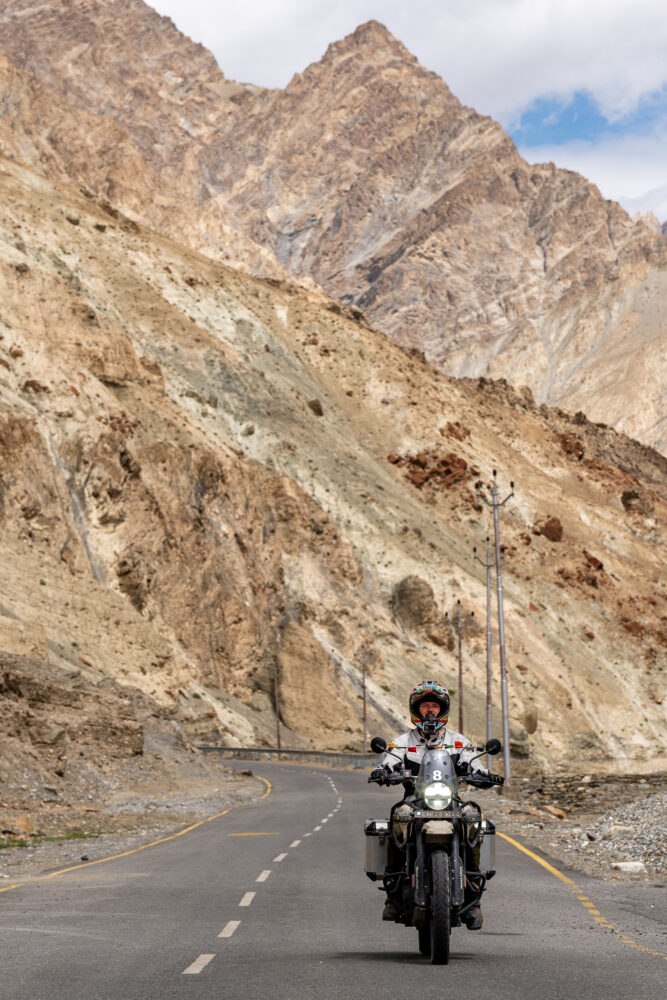
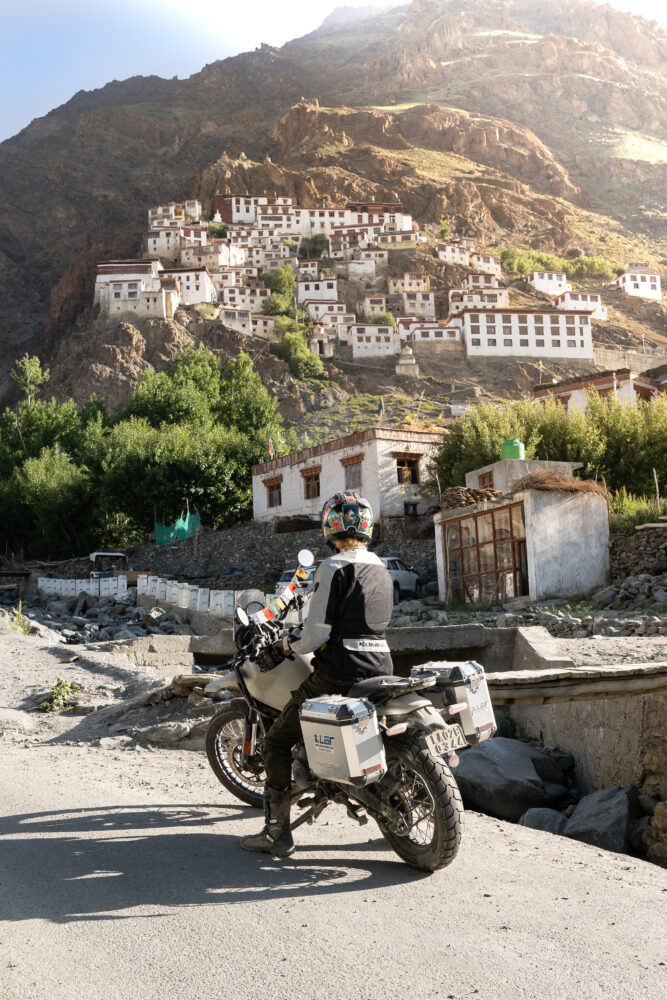
No exaggeration. The curved, mostly paved, mountain roads are made for motorcycles. This is probably the number one reason people come to Ladakh. It’s some of the best scenery in the world for a ride. It’s also pretty difficult in parts. I’ve written two different guides for people hoping to explore the region on a motorcycle, so be sure to read my Zanskar Valley and Pangong Lakes guides if this is you.
2. There are some really neat high-altitude treks.
If moto-travel isn’t for you, you can go trekking instead! There are stunning (and challenging) multi-day mountain treks that take you into the Nubra Valley and Lakes regions to stay in homestays, better understand the local culture, and spot wildlife that prefers to be far from the paved roadways.
Ancient Tracks is a local company that comes highly recommended.
3. Some of the most incredible wildlife in the world live here.
Speaking of wildlife, Ladakh has that in abundance. Wild Asses, Himalayan Brown Bears, Himalayan Marmots, Yaks, Snow Leopards, Pallas Cats, Lynx, Ibex, and more. Unfortunately, unless you actively seek it out, it’s quite difficult to find.
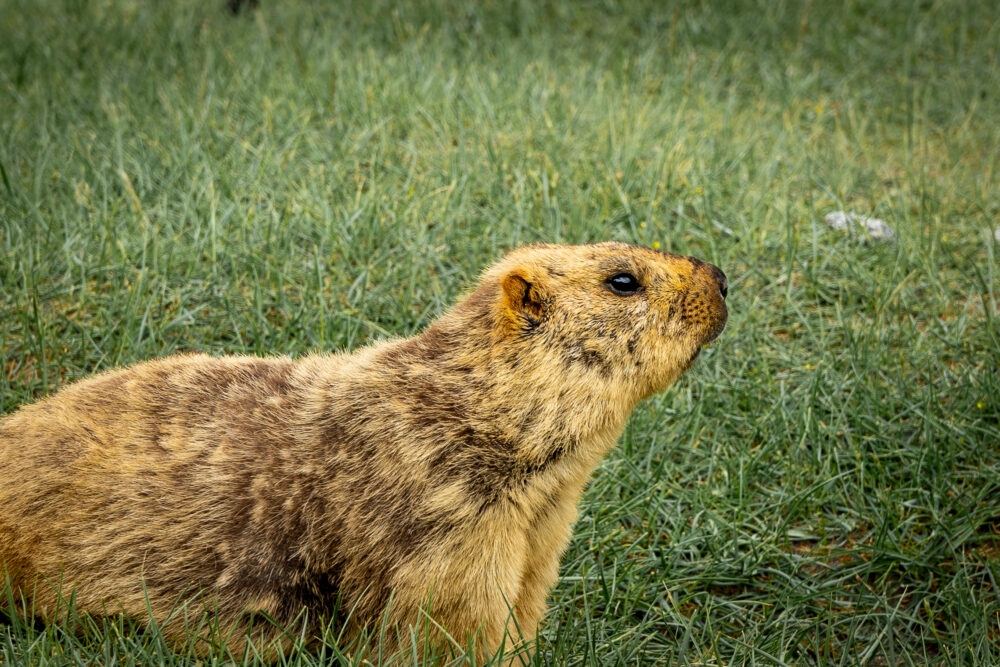
There are specific guides and trekking agencies you’ll find in Ladakh city that can take you into the mountains in search of the species of your choosing. I’ll give a quick overview of the three most popular species to search for!
Snow Leopards
Hemis National Park has the largest population of Snow Leopards left in the world. They can also be found around the Pangong Lakes region of Merak and Hanle from time to time. You *must* book with a specialized agency like Ancient Tracks or Lungmar Remote Camp. February is the most popular month to spot them.
During our moto trip, we saw lots of Yaks and Himalayan Marmots. We also got to see wild asses on the high pass we took on the Manali – Leh highway. So I suppose this is another perk of road travel.
Himalayan Brown Bears
Drenmo Lodge near the Mushkow Valley is the most popular place to spot this hefty mammal. This place is on my short list of destinations to visit next time in Ladakh. Spring is the best time to see bears here, although it’s still possible in summer and early autumn.
Pallas Cats
Hanle is the most common place to spot Pallas Cats in Ladakh, and while wintertime is the easiest time to spot them, you have a chance to see them year-round.
Hanle is also a dark-sky certified region with Asia’s largest telescope. You should go just to experience a starry night.
4. Enjoy the stunning scenery of the region.
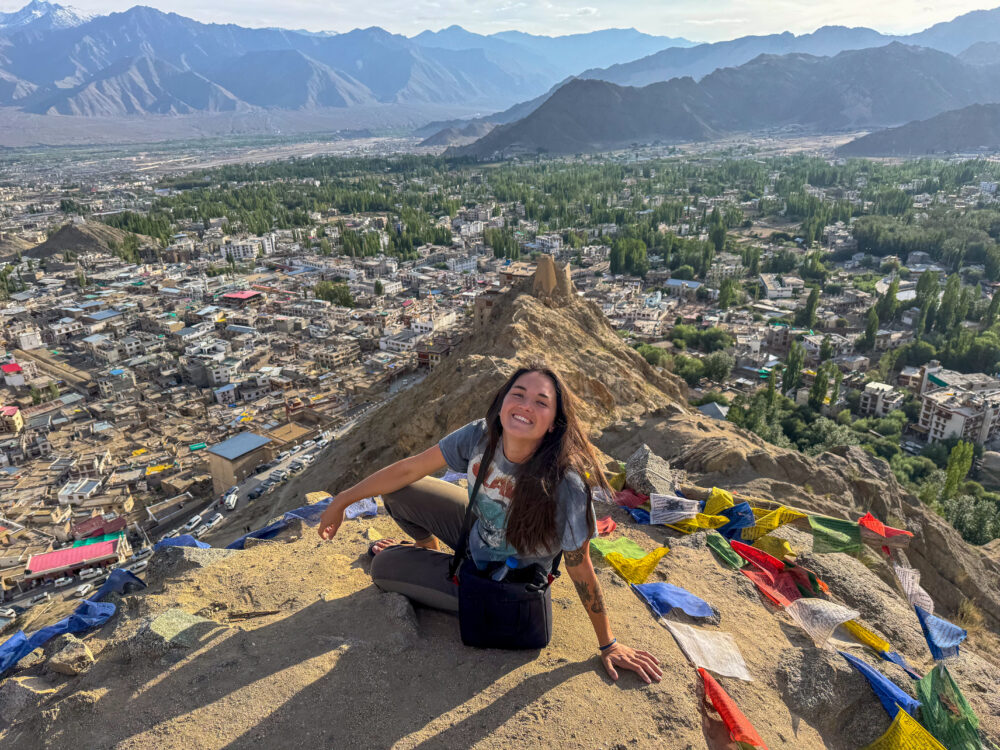
Nubra Valley and the Pangong/Tso Moriri Lakes Region are absolutely beautiful. Zanskar and Kargil are spectacular. The entirety of Ladakh is filled with lovely forests, quaint towns, huge open valleys, high mountains, and brilliant blue lakes. It’s a place worth exploring. These are just a handful of my favorite destinations that you could book a private driver to.
- Pangong Lake. The most popular and brilliantly blue of the lakes.
- Tso Moriri. Equally pretty, less visited.
- Kargil. A look at a region much more heavily influenced by Islam.
- Turtuk. One of my favorite little forested towns near the Pakistan border.
- Hundar. Known for dunes, but I enjoyed the riverside.
- Padam. My absolute favorite place in Ladakh. You must visit for the monasteries and stunning landscapes.
5. Leh is a cool city with an insanely well-preserved culture and history.
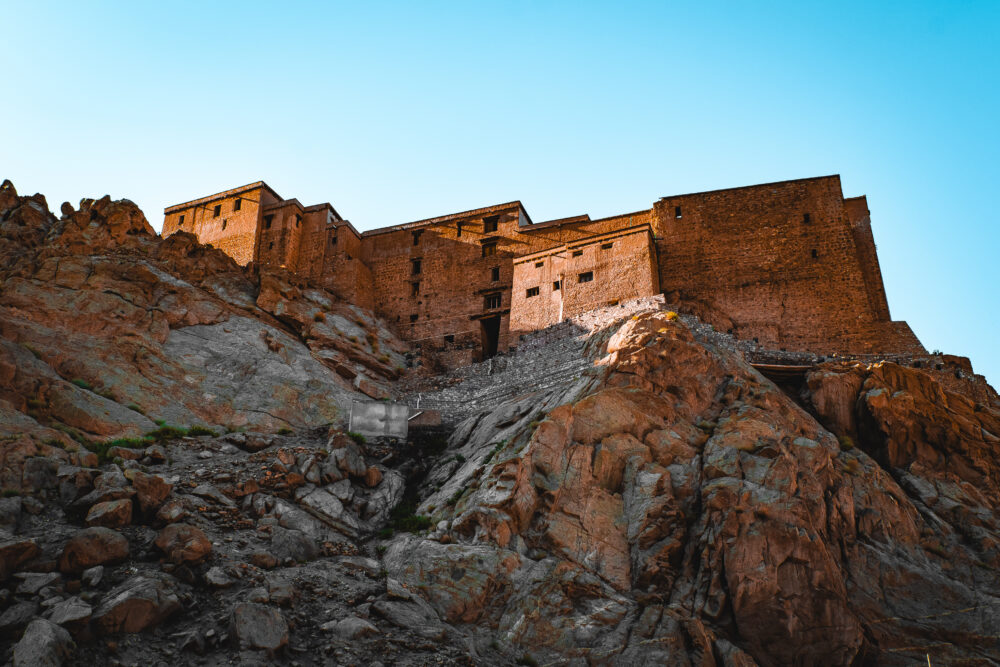
It’s time to dig into Leh. Because the whole point of this guide was to showcase to you that Leh is a worthwhile destination all on its own. Truthfully, most people who visit Ladakh are here for the further flung regions or for moto travel (which I agree are definitely worth doing), but I was also impressed by the town of Leh itself.
The Tibetan culture had infiltrated (in the best way) the main market areas, with lots of diverse food offerings, incredible shopping, mosques, monasteries, ancient castles, women’s markets, lovely views, charming guesthouses, preserved handicraft and building practices, and super eco-consciousness.
I loved Leh, and here are the things you should know before you go.
Some Quick Things to Know About Leh Before You Go
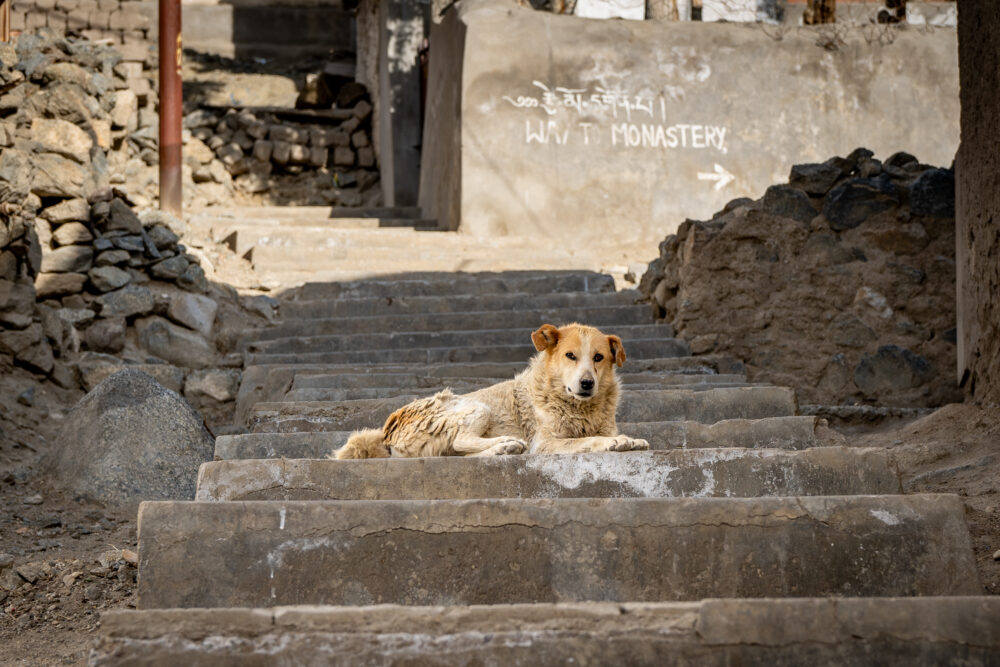
- Leh sits at an elevation of 12,000 ft, so expect to take some time to acclimatize.
- It’s a tobacco-free city (mostly), so you should be very cautious about smoking anywhere and keep an eye out for signage that prohibits it.
- Tibetan culture is prominent here, as around 7,000 Tibetan refugees came here during the Tibet crisis.
- DO NOT BRING A GPS DEVICE OR SAT PHONE. I talked about this in other blog posts, but India prohibits these devices, and you can even get jail time as a traveler who accidentally packs one.
- When searching for food, keep in mind that the city sometimes goes 100% vegetarian. This is during a Buddhist holiday. These happen several times a month, so just be prepared with a vegetarian backup.
Where to Stay in Leh, Ladakh
There is no shortage of places to stay in Leh. These were the three top choices for us.
New Royal Guesthouse ($$)
Private rooms are super cozy + breakfast included is delicious. You even get to eat on the rooftop with a view. Also, very easy to walk into the heart of Leh. This was our top choice for places to stay.
The Courtyard Bunks ($$-$$$)
Offers private rooms + bunks, breakfast included. A little outside town, but ideal for moto riders as it is also the home base of Ladakh Bike Rental.
This budget-friendly option is also super comfortable and an easy walk into town. It’s just up the road a little further from New Royal.
What to Eat in Leh, Ladakh
Let’s take a quick peek at my recommended eats in Leh. Some are Tibetan, some are Indian, some Ladakhi, and others are international.
Before I get into the restaurants and cafes, let’s talk about bread and ice cream. Two items you’ll find EVERYWHERE in Leh. The bread is made street-side, and you should most definitely eat it in the morning with your guesthouse breakfast. The ice cream is just inexplicably everywhere in Leh. It’s the most popular snack.
- Lala’s Cafe. Set inside a preserved traditional house. More for the Ladakhi tea and fresh juice but also serves snacks.
- Kafenio Cafe Leh. If you’re looking for the best coffee in Leh and an outdoor setting to sip it in, this is the place.
- De Khambir. Traditional Ladakhi meals, great for vegetarians/vegans.
- The Tibetan Kitchen. One of the most popular places to eat in town, for good reason. We loved it for a hearty dinner.
- Apple Tree German Bakery. Great baked goods.
- Bodhi Terrace. Owned by a local photographer and 100% vegetarian, this hippy cafe has an excellent rooftop area with a view, and all the food was so tasty.
- Achos Pizza. Incredible. 10/10. Honestly, some of the best pizza I’ve ever eaten in India or South Asia as a whole. Sometimes this is just what you need. The sandwiches are good too.
- Solja Cafe. Cute cafe with simple Ladakhi eats that is run by the local women. This is where the women’s market I mentioned below is.
- Biryani Hut. The most economical option in the city. Piles of Biryani for cheap. A real local spot.
- Asian Corner Restaurant. Vague name, but really great northern Indian food with large portions and good prices.
- Ladakhi Organic Food Restaurant 100% Veg. I didn’t get to try this one but it was on my list!
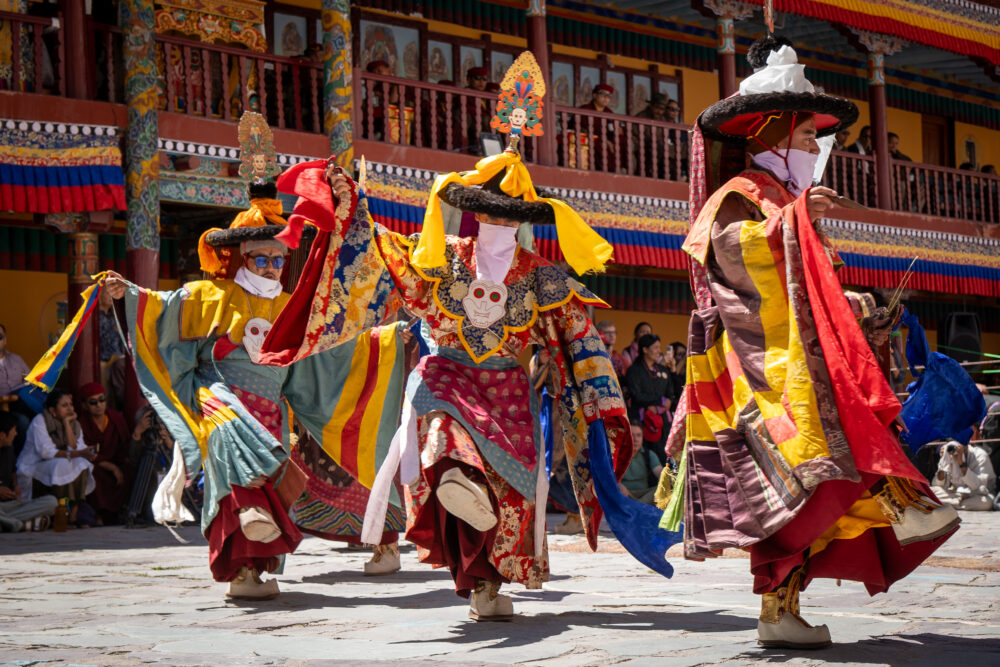
Best Things to Do & See in Leh City
While I’ve already covered some of the more interesting things you should do if you come to Ladakh (motorcycle loops, trekking, wildlife-watching, and remote monasteries), what should you do while you are acclimating or spending time in the town of Leh?
On its own, Leh is a worthwhile destination, even without all of the surrounding activities.
Here’s what you can’t miss…
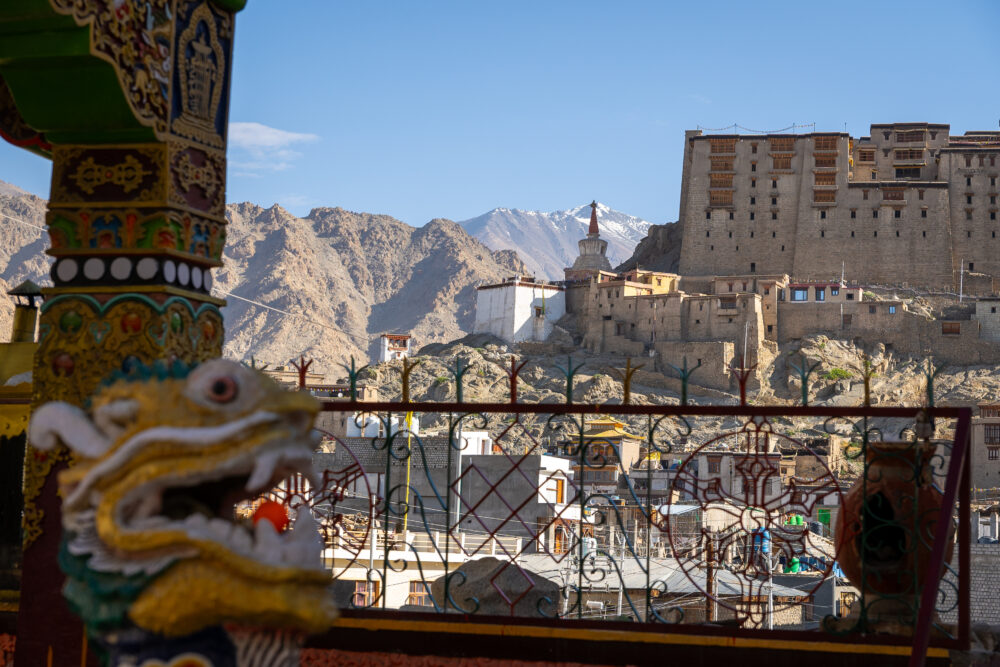
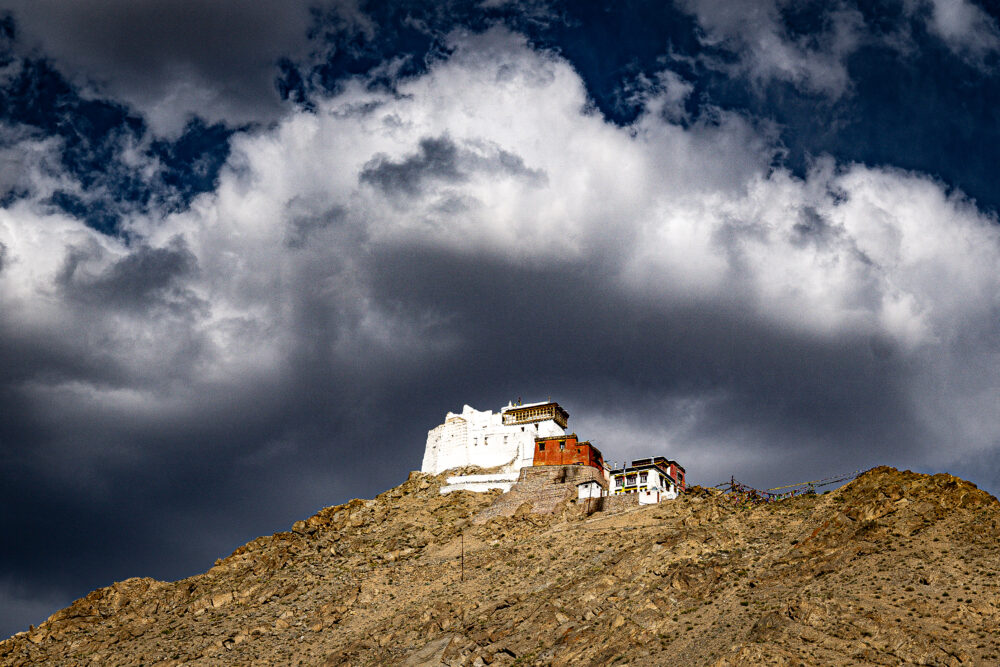
1. Old Castle AKA Tsemo Hill
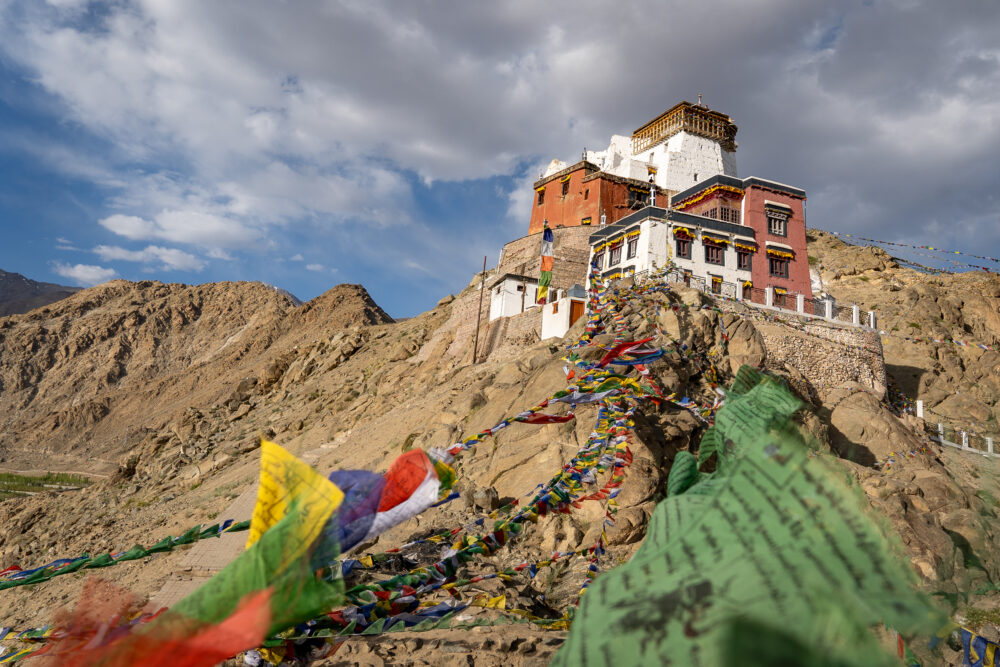
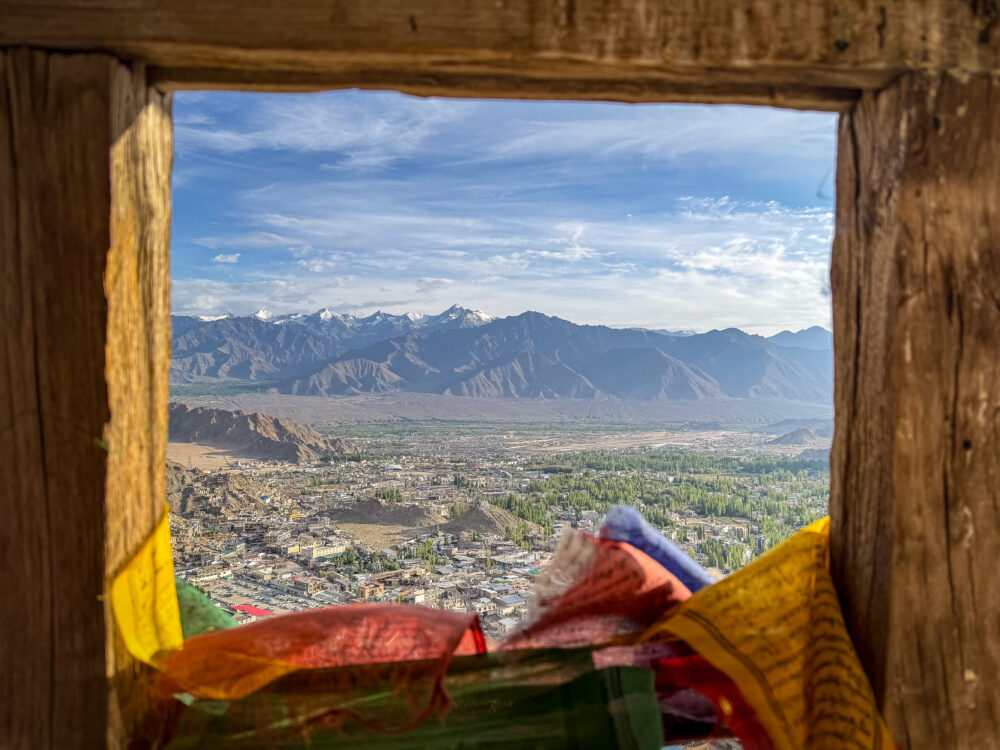
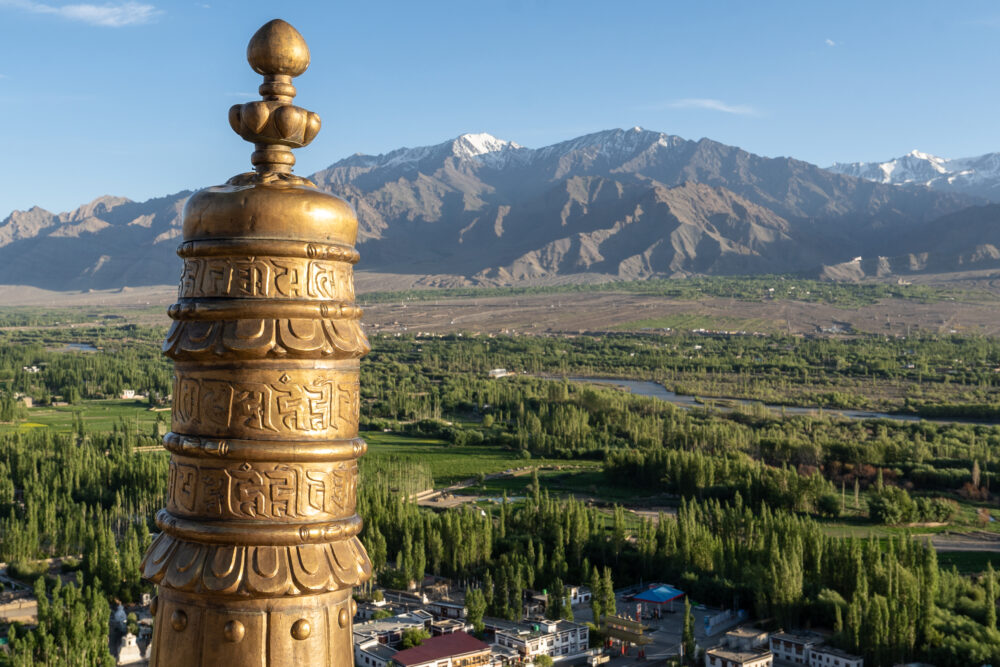
If you only do one thing, it should be to hike up to the Old Castle at sunset. Thanks to the surrounding mountains, the sunset offers the perfect golden glow to the city, and the route up (take the back trail from near the Hindustan Petrol Station and Half Moon Guest House) only takes about 20 minutes. There’s a beautiful viewpoint from the top.
If you don’t feel like walking, you can ride up in a taxi or drive your bike up, but the trek up goes through a small village and is worth doing.
2. Take a Moto Ride Out to Shanti Stupa & Sankar Gompa
Both these sights are quick stops that give you a little more insight into the Tibetan Buddhist culture of Leh.
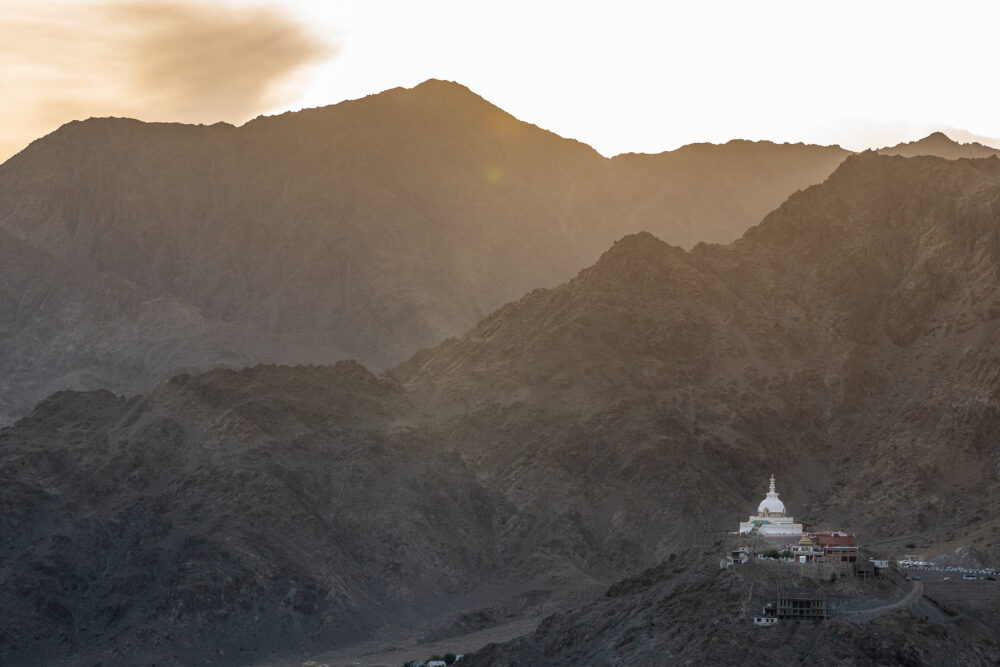
As of 2025, the Golden Buddha is still being constructed (even then, it’s worth a visit), but you should add this to the list of things to see as well.
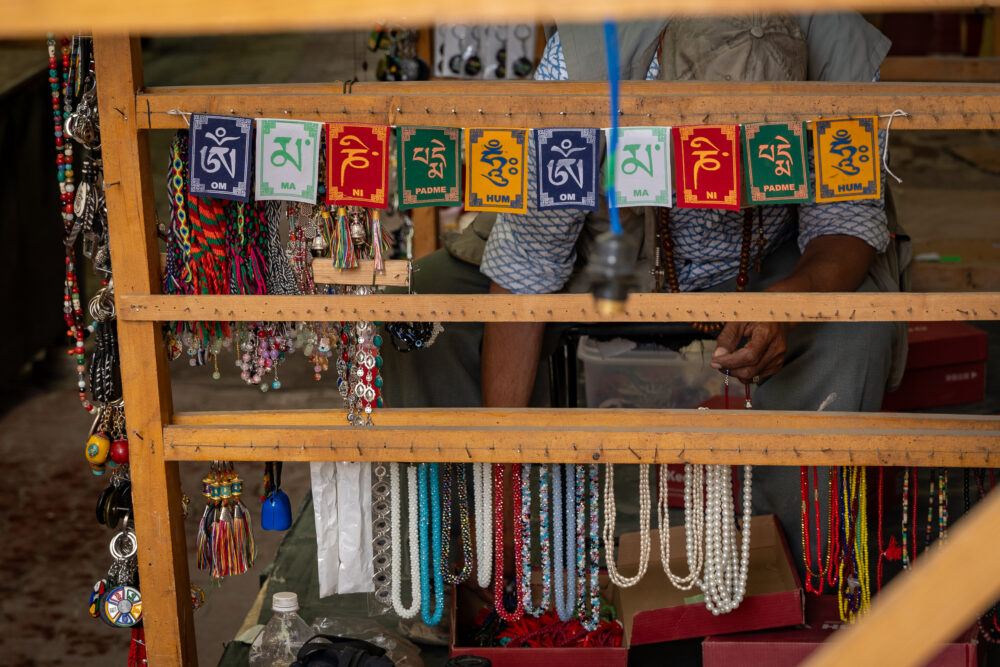
3. Visit Leh Main Market
The main market in Leh is where you can get incredible fresh dried fruits like apricots and mangos, Tibetan Thangkas (traditional paintings) hand-painted by novices or masters depending on your budget, and souvenirs that are literally pieces of history, dating hundreds (or thousands) of years old. It’s not a touristy market. I mean, it is for tourists, but it’s not filled with shitty Chinese-made trinkets you could get anywhere else in the world.
4. Walk Through Leh Palace
Less impressive and more like a museum than the Old Castle, but it is still worth a visit.
5. Check Out the Tibetan Market
I have mentioned the Tibetan residents of Leh on multiple occasions in this post. Here’s a great place for you to support them. Keep in mind that it’s more open during the afternoons and evenings.
6. Take a Day Trip Just Outside the City
There are three noteworthy destinations within a 40-minute drive of Leh.
- Kardung La, the second-highest motorable pass in the world.
- Hemis Monastery. Pretty to see, but more interesting if there is a festival going on. July is a popular time of year for festivals.
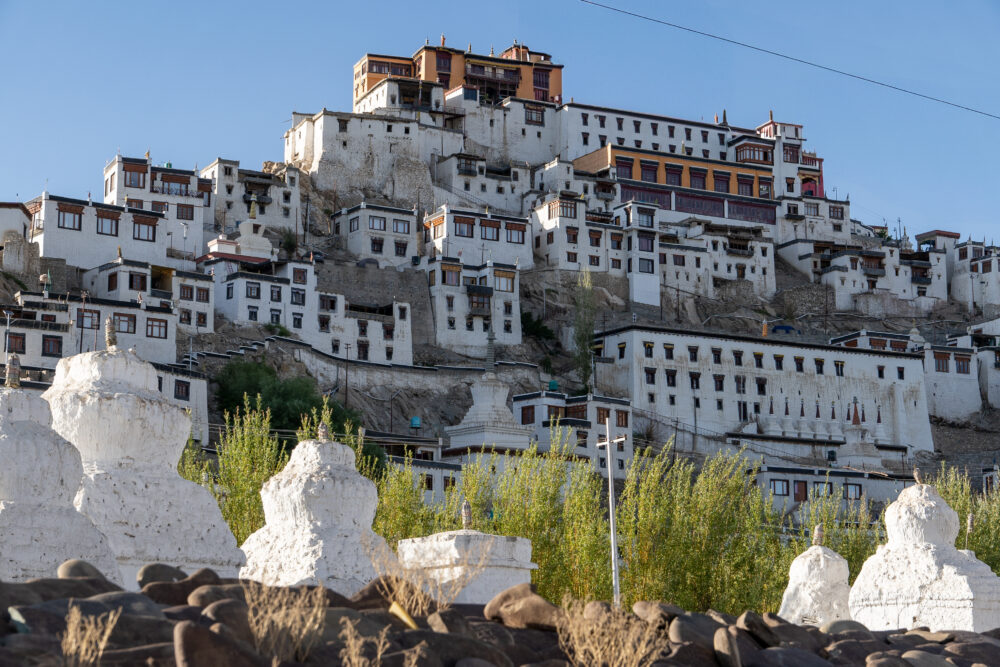
- Thiksey Monastery. A stunning monastery, maybe one of the most impressive in the region. This is the one you should absolutely make the effort to visit.
7. Support the Women’s Market
In the green area behind Solja Cafe from 4 PM until late, there is a women’s market every day where you can buy handmade goods made by local women as well as fresh local food. Even if you don’t want cashmere scarves or socks, the dumplings and dried apricots are excellent.
8. Stroll Through the Mosque
While Buddhism is the predominant religion in Leh City, there is also a huge Muslim population. In fact, there is both a Shia and a Sunni Mosque in the main market. They welcome outsiders, presuming you are dressed properly and don’t visit during prayer time. Both religions live in harmony here, and it’s nice to check out the beautiful buildings and meet some of the locals to get a more well-rounded look at the city.
How to Get Around Leh
Getting around Leh is easy. You walk! The entire town is pretty walkable if you stay in the guesthouses that I suggest. The key is to stay near the main market side of town. Otherwise, you’ll have quite a lot of walking, and at this altitude, that’s far from ideal.
If you want to visit ANYTHING outside of Leh, you’ll need to drive yourself or hire a driver. Taxis are limited within Leh. In fact, outside the bus station drop-off, I was never offered a taxi ride in Leh city. Both a blessing and a curse.
How Much Does a Trip to Ladakh Cost?
Like the rest of India, Ladakh is a very affordable destination for most travelers.
In 2025, I traveled extensively in the region on $80 per day for two people. This included a $40 per day motorcycle rental with Ladakh Bike Rental. So obviously, if you aren’t planning on venturing beyond Leh, you can get by on A LOT less.
If you stay in Leh, you can easily get by on $20-$25 per person per day if you stick to a tight budget, as there are plenty of guesthouses and budget food options for you to choose from.
Want More Posts on Popular Destinations In India?
Here are a few other guides I’ve made during my time spent traveling in Northern India.
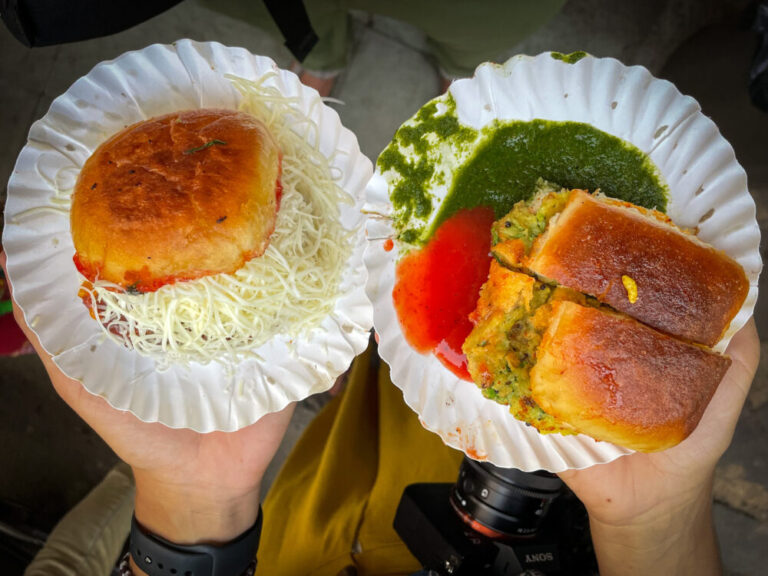
The Best Eats in Mumbai for all Budgets: A Food Lover’s Guide
A Beginner’s Guide to India: Travel Tips for First-Time Visitors
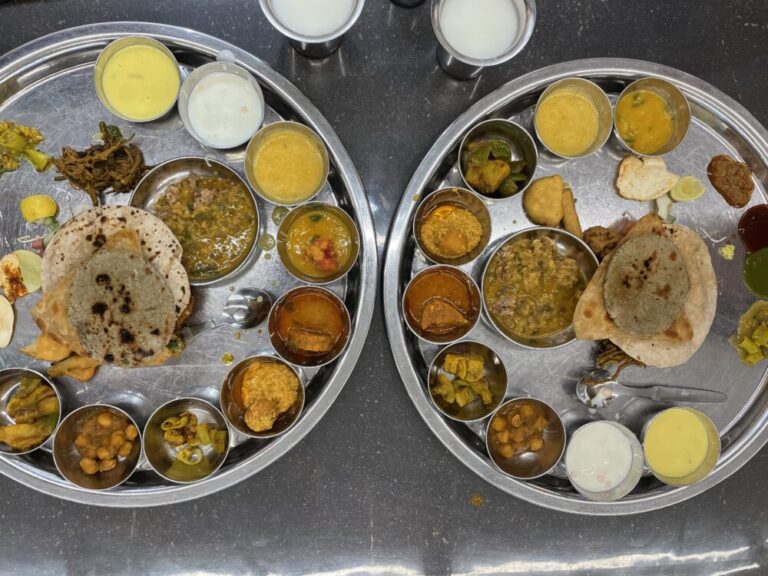
Food of Rajasthan: My Favorite Restaurants for Local Rajasthani Cuisine
Save This Guide to Leh, India For Later!