This post may contain affiliate links. This just means I may receive a small commission at no extra cost to you for helping them promote their product or service. I don’t endorse any services I don’t personally use or recommend.
Chitwan National Park is far from a hidden gem in Nepal. Its proximity to the polluted capital of Kathmandu makes it an easy escape for even travelers short on precious time. Unfortunately, this has given the park the reputation of being crowded, unethical, and not worth visiting for discerning travelers. I vehemently disagree with this assessment.
Don’t get me wrong, there is a wrong way to visit this park. A way where your experience is likely to feel more like a visit to a zoo than a wild safari on the massive tract of nature preserve that it is. That’s why I’m detailing in this guide how to visit Chitwan National Park in the best way possible. Because if you’re a nature lover, you cannot pass up the incredible experience of spotting tigers, sloth bears, and Asian one-horned rhinos inside Chitwan’s boundaries.
Here’s everything you need to know about visiting Chitwan National Park.
Why Visit Chitwan, Nepal’s First + Most Successful National Park
Chitwan is a subtropical lowland, an ecosystem and climate in Nepal that you don’t see a lot of. It feels like a jungle. The surrounding communities do a lot of farming, and this makes the villages exceptionally pretty with terraces of rice and lush green landscapes. Idyllic setting aside, Chitwan National Park is a conservation success story.
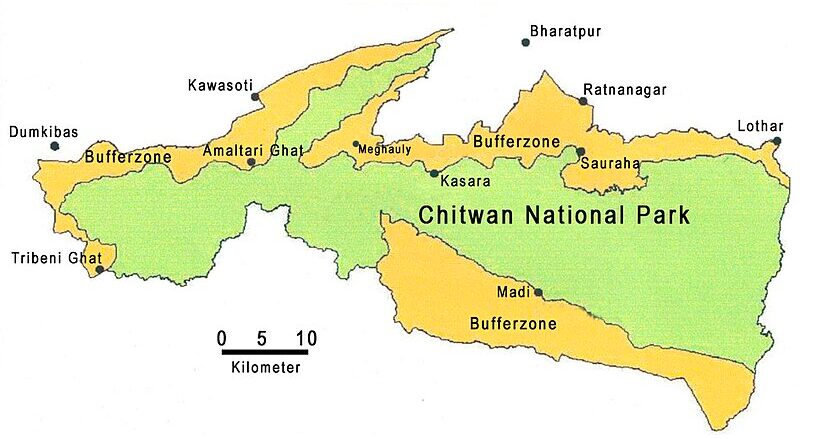
Back in the 1970s, it was established as Nepal’s very first national park due to the abundance of biodiversity in the forests here. The size of it is massive. Over 90,000 hectares of land. For a country the size of Nepal, this would be like carving out a chunk of land 1/150th of the country for their first park. Like the entire metropolitan area of Lyon in France. But the country recognized that it was one of the last strongholds for several key species. Since its creation, the park has been a success, and populations have been rebounding.
Conservation aside, why should you, as a backpacker/traveler, visit?
- For a chance to see wildlife that you cannot see anywhere else in the world.
- To enjoy a different side of Nepal from the high mountains.
- Support a local guesthouse/hotel that is rescuing elephants from shitty situations in Nepal.
And yes, this guesthouse gives you an exclusive elephant experience so you can enjoy hanging out with these gentle giants in addition to saving them from hard labor.
Wildlife You Can See in Chitwan National Park
Let’s talk about what exactly you can see in Chitwan National Park and how likely each sighting is in reality, so you can mitigate your expectations.
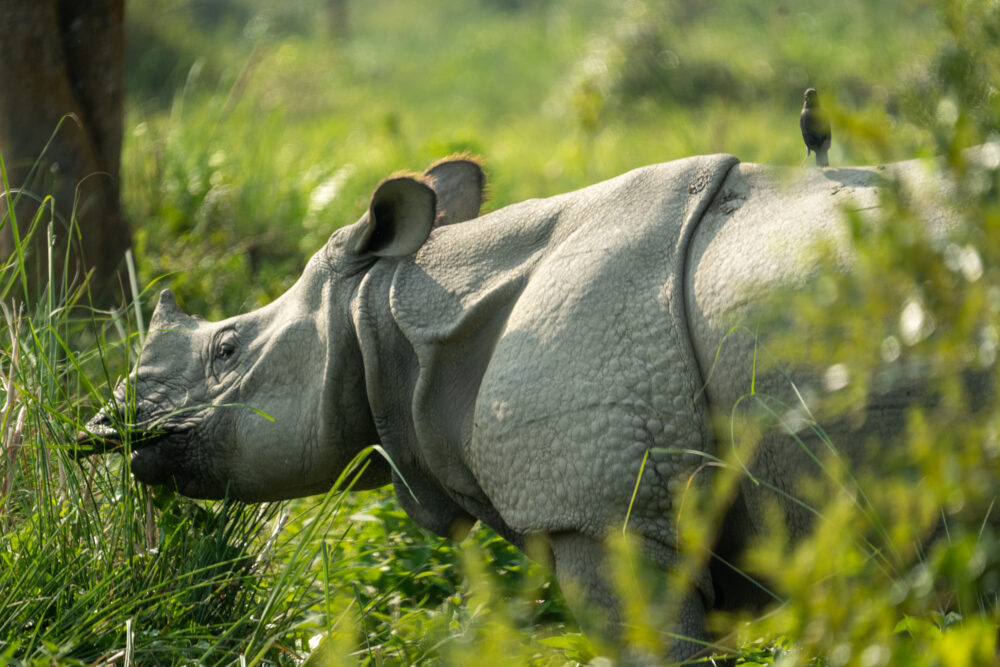
- One-Horned Asian Rhinoceros. Very likely to see. In fact, this is the single best park in the world to spot this species.
- Bengal Tiger. 50% chance of spotting. The time of year you visit matters a lot here. If ALL you want is to see a tiger, then Bardia National Park in the far West of Nepal, while much more tedious to get to, has a better shot at sightings.
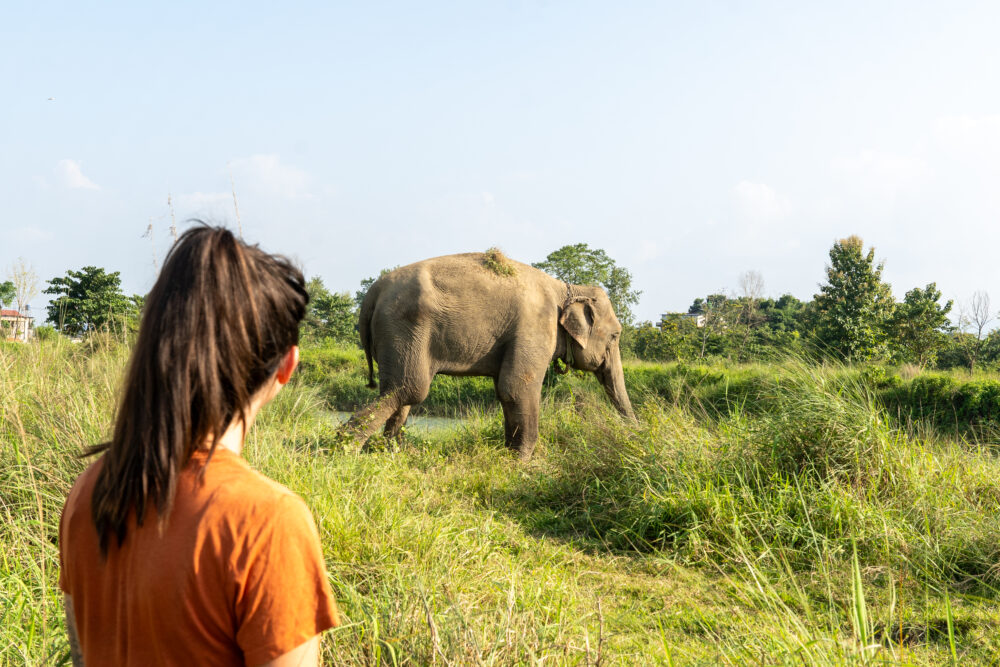
- Asian Elephant. Wild, they are elusive and seldom seem. But if you choose to stay with Sapana Lodge, which I recommend below, you’ll have some guaranteed interactions.
- Leopard. Super rare.
- Sloth Bear. Also, very rare.
- Guar. You’ve got a decent chance at spotting this ungulate…maybe 50%.
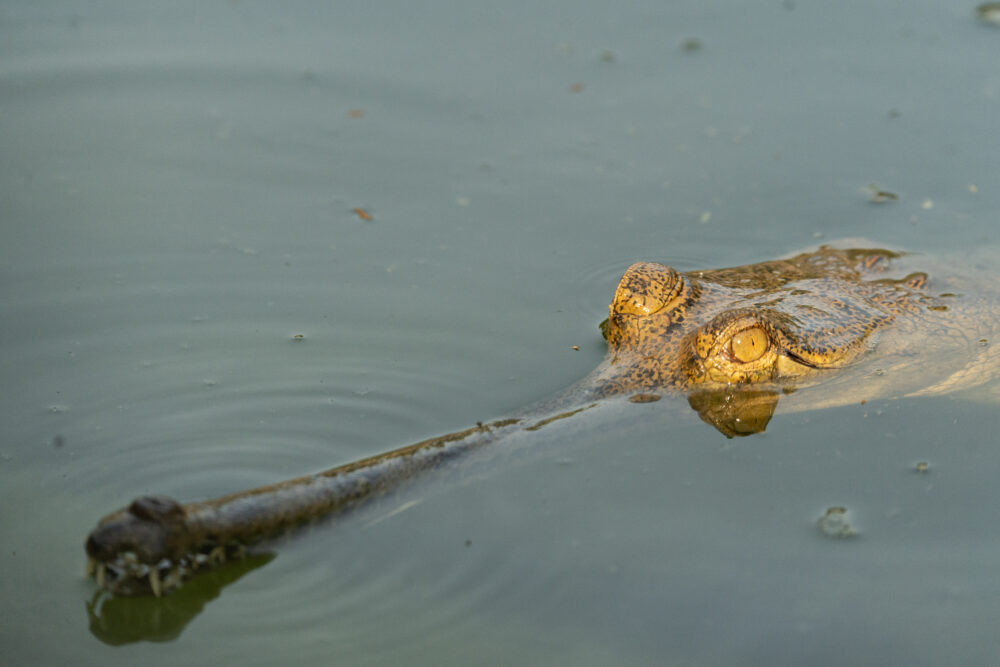
- Gharial. Pretty much guaranteed sightings if you opt for a canoe safari or visit the Gharial rescue center within the park.
- Sambar. 75% chance you’ll see this massive Elk-like deer.
- Hog Deer. Very likely.
- Rhesus Maqaue + Langur. Also very commonly sighted.
- Chital (deer). Pretty much guaranteed.
There are also numerous species of mongoose, hundreds of species of tropical birds like the Kingfisher (easy to spot) and Great Hornbill (not easy), and various other small animals. But these are the most sought-after sightings.
Best Time of Year to Visit Chitwan
Time of year matters.
This is because while the park has loads of trails, it’s also super bushy at certain times of year, which means the only chance you have of spotting wildlife is if they cross the road in front of or behind you. While this may sound okay, it’s actually very difficult.
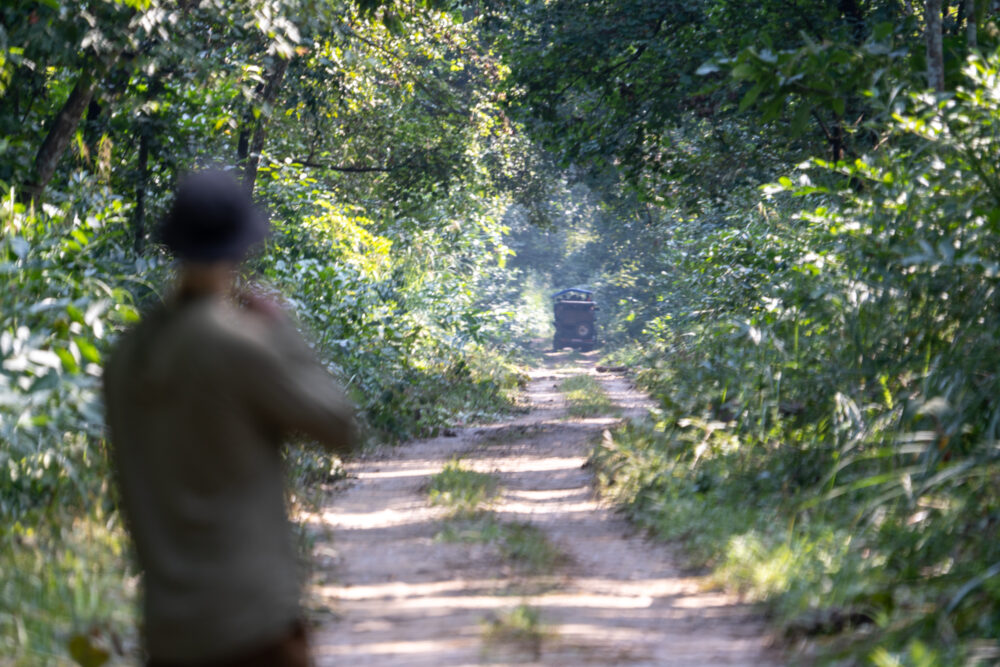
Best time of year: March and April. This is because the local communities manage large parts of the forest here and cut down the super-tall reeds and grasses in early March. This means that for a few months after the cut, you can see wide open plains in portions of the park. This makes spotting wildlife SO much easier. You’ll immediately have a much higher chance of seeing any of the animals on the above list.
Alternative Good Times of Year: October, November. This is when we visited the park. It’s right after the rainy season, which means the landscape is HUGELY bushy, lush, and green. Super pretty for jungle vibes, but super challenging for spotting wildlife. That being said, this time of year coincides with a lot of rhino babies running around, and the animals are generally a little more active due to the changing weather. It’s also a really comfortable time of year to visit Chitwan as the region is super hot and humid.
You can definitely visit during the months of December, January, and February as the temperatures are quite pleasant in the park during this time as well. Another plus is that because it’s not the “Peak Season,” you won’t have as many crowds.
Chitwan’s Off-Season: The park is totally closed during the monsoon months of July + August, usually reopening during mid-September.
You don’t want to visit during May or June. Not necessarily because of the wildlife sightings, but because the temperatures in the park are crazy high during this time, and the chance of rain increases day by day.
Read More: Time your visit with Nepal’s trekking season on the increasingly popular Manaslu Circuit or one of our recommended crowd-free Nepal treks.
Getting to Chitwan National Park
99% of people take a bus from Kathmandu or Pokhara to reach Chitwan. This is not only the cheapest way, but it’s pretty painless and convenient. Chitwan sits at about the halfway point between the two cities, which is why the three are nicknamed “The Golden Triangle”. If that sounds familiar, it’s because there is a touristy Golden Triangle in India as well (Jaipur, Delhi, Agra).
How to Get to Chitwan National Park from Kathmandu
Officially, the bus from Kathmandu to Chitwan is set to take 5-7 hours. This includes three stops for chai, lunch, and a restroom break. The buses are plushy and couch-like and provide bottles of drinking water. Overall, 9/10 bus experience.
As of 2025, tickets cost around $9 per person or 1,200 NPR.
I *highly* recommend using the bus company called Chitwan Safari. We were booked on a different company bus for the return trip, and it was NOT smooth. The bus broke down three times, the route took 10+ hours, and the condition of the bus was FAR worse.
Babu from My Garden House in Kathmandu can get you booked into the right bus, and even better, the stop is right out front of the lovely Thamel guesthouse. This is easily the best place to stay in the city for a variety of reasons.
How to Get to Chitwan National Park from Pokhara
This route is very much the same. It should be similarly priced and take somewhere between 5 and 6 hours, including stops.
Is Chitwan Ethical?
Let’s address the rhino in the room here. Many backpackers say that Chitwan is over-crowded, which can lead one to deduce that it’s not the most ethical place to see wildlife. But that’s because you’re visiting wrong. Let’s start with the mistakes people make.
Chitwan town, or the area near the river known as Sauraha, where 99% of tourists start from, is bleak. Choosing to stay here is like choosing to stay on Khao San Road and then complaining that Bangkok is just a party town. The hotels here are crowded together, overpriced for basic rooms, and everyone is trying to sell you things. Compare that to any of the slightly more rural guesthouses not in the town center, and it’s a world of difference.
The other big problem is that people on a super tight budget want to get in and get out of the park quickly. This means the vast majority of visitors do the half-day shared jeep safari. This is the most economical option. Unfortunately, the way this safari is run is very commercial. I’ll get into the details of it below, but if you opt for one of the other safari options, I promise you’ll be much happier with the experience.
The half-day shared jeep was very reminiscent of my frustrating Jim Corbett Safari experience in India. You can read about that here if you’re planning to visit India in search of Bengal Tigers.
Where to Stay: Sapana Village Lodge
I’ve alluded to this place enough. Let’s talk about the very best place to stay in Chitwan National Park.
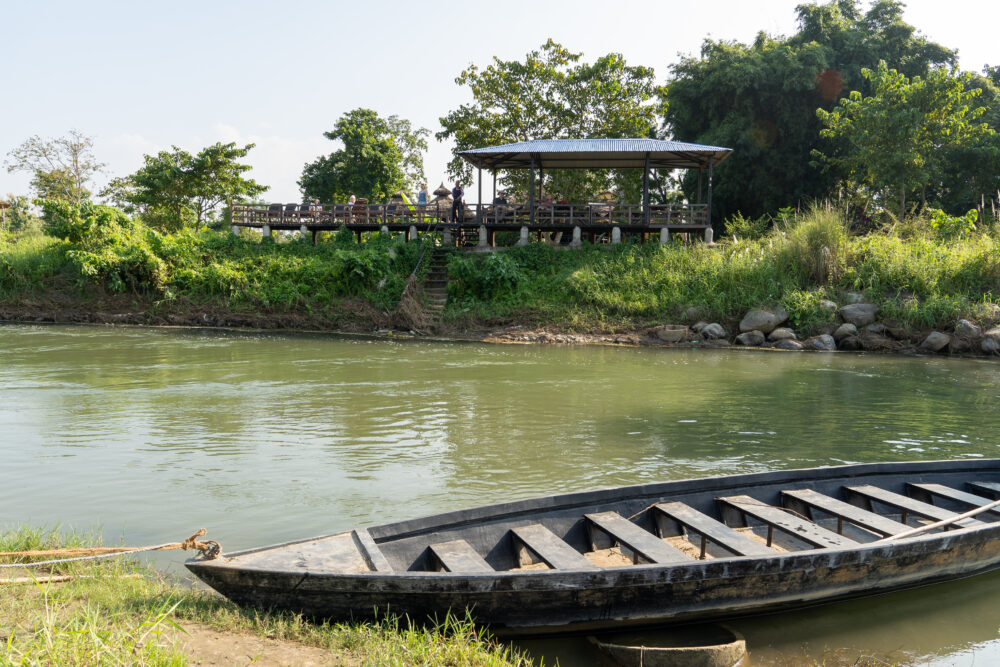
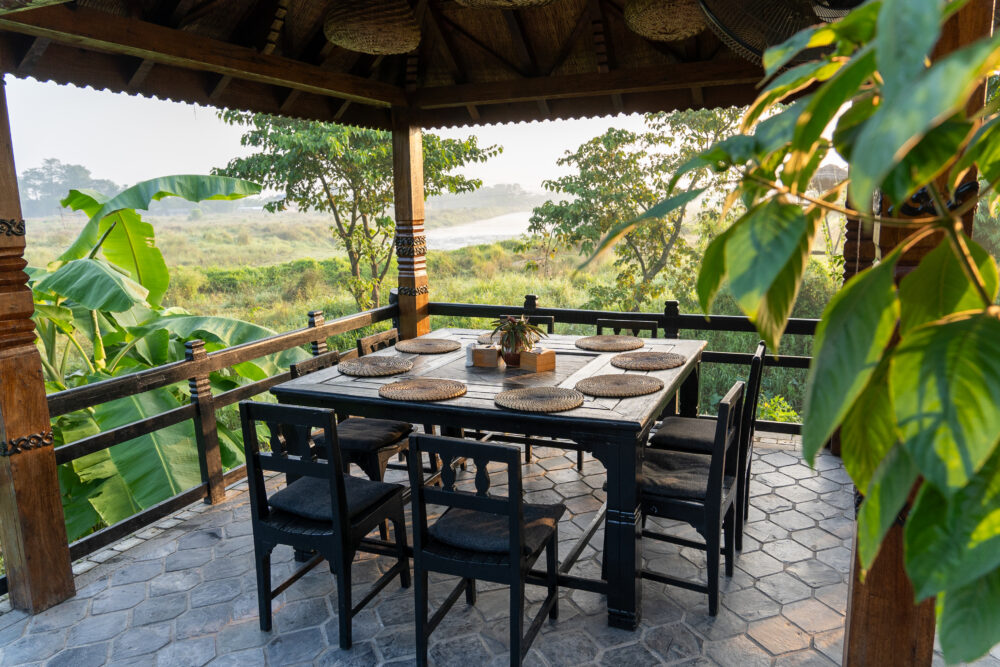
Sapana Village Lodge is set just a 5-minute drive outside of Sauraha, alongside a curving bend in the river on a large piece of land. The rooms are crazy comfortable and far superior to most anywhere else in the area, but that’s not why this place is special.
Sapana Village Lodge is run by a local Nepali man with a passion for wildlife and the greater Chitwan community.
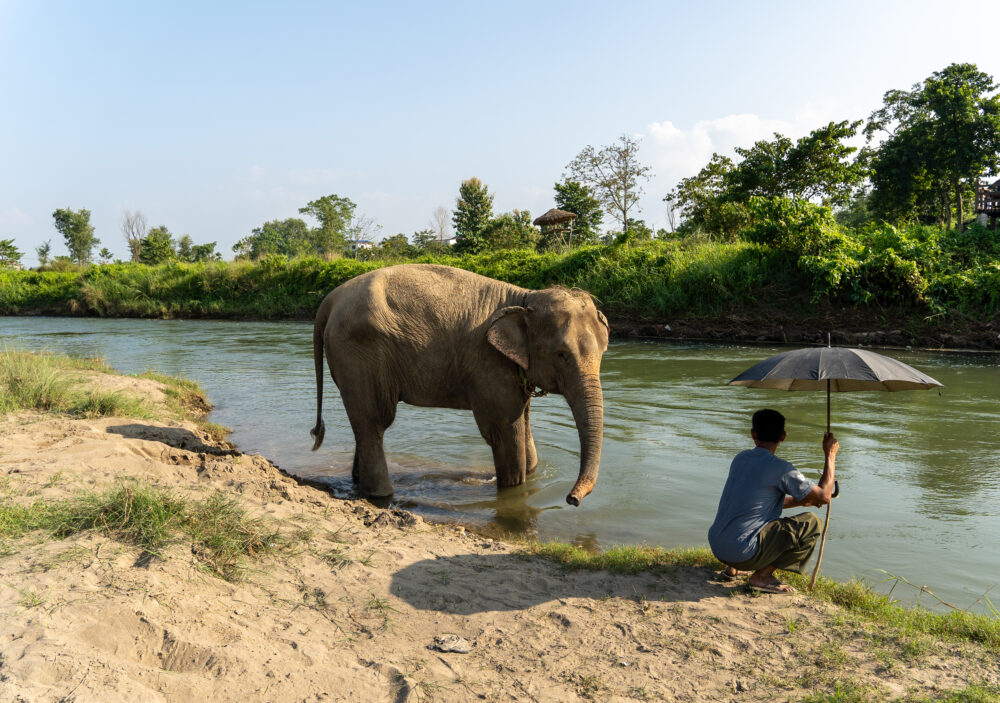
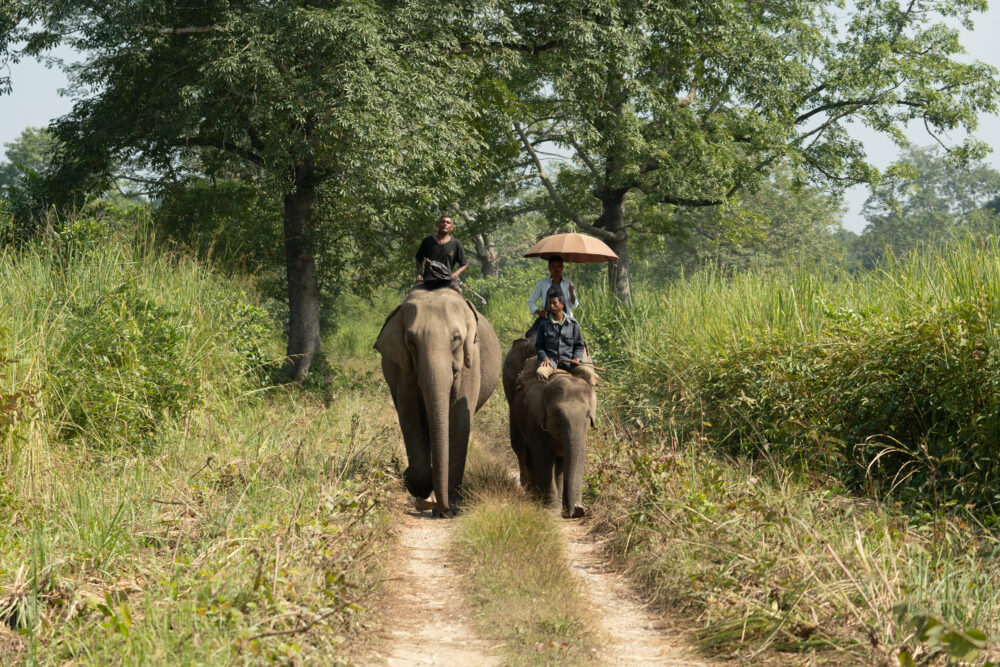
The lodge rescues Asian Elephants forced to work in ride camps and do manual labor. Unfortunately, this is a huge problem in Nepal and Chitwan in general. Ride camps are super prevalent and still a popular attraction for many tourists. Don’t ride them. Seriously. It’s 2025, we can do better. Sapana takes in these elephants and assigns them a mahout who lives with them 24/7. Because of this bond, they use no bull hooks or other typical means of protection used by animal caretakers. It’s a no-pain sanctuary.
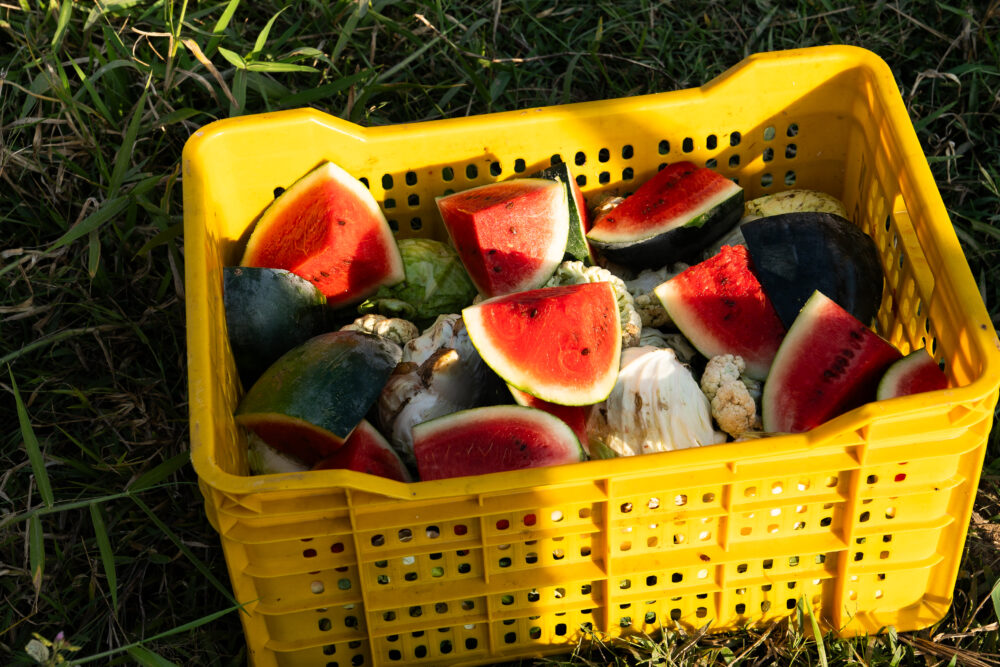
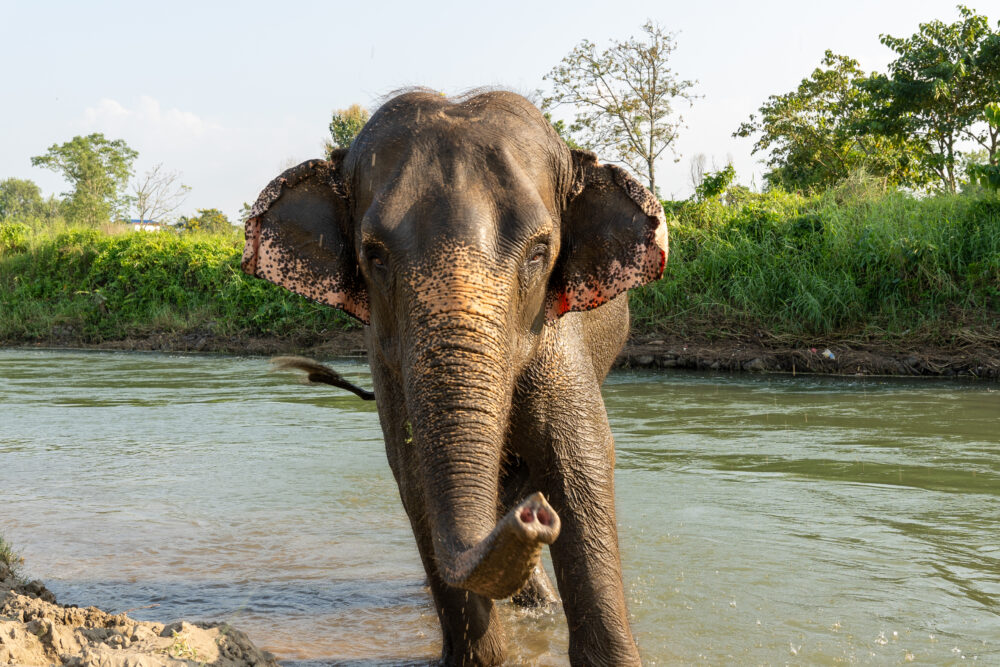
But Sapana doesn’t just care about the animals. They also care about the community. The property funds local women’s initiatives and schooling for village kids, among other things. Staying here means you are supporting the Chitwan villages rather than blowing in and out, giving little back. You can even shop for hand-crafted goods at their women’s center on-site.
Even if you are balling on a budget and couldn’t care less about shopping for souvenirs, etc, Sapana is still the best choice for a good Chitwan experience.
From the restaurant overlooking the river, you’ll spot wildlife, watch their rescued elephants bathe and munch on tall grass, and revel in the pretty Chitwan sunsets. You can book all your safaris directly through them and use the Sapana naturalists rather than generic park guides.
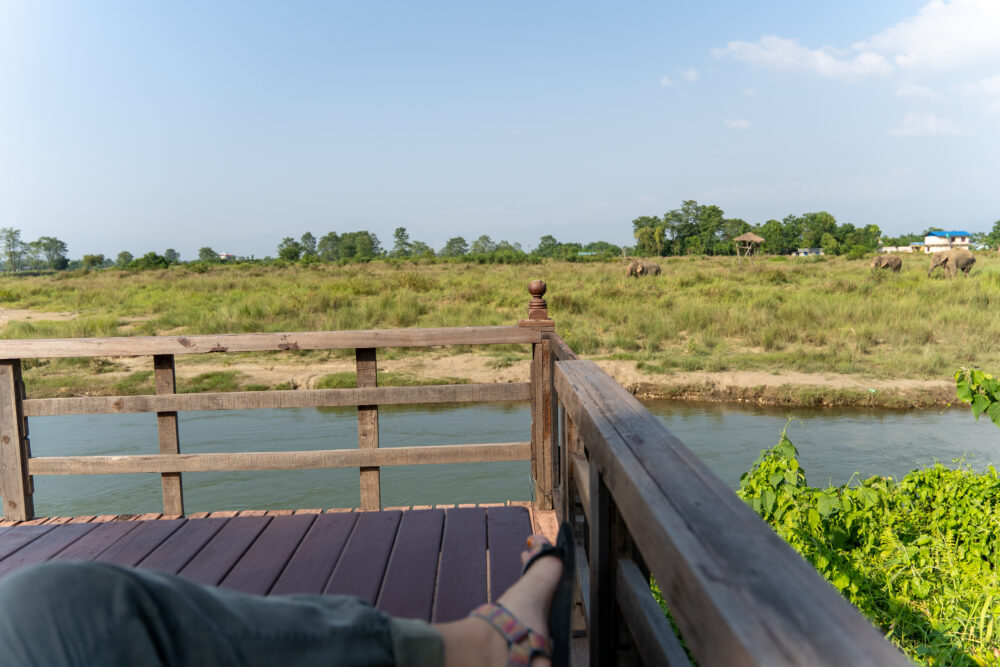
Sapana Lodge costs around $75 a night for a basic two-person room with breakfast, so I would call it modest luxury. The cheapest two-person rooms we found in the Chitwan area were around $30 per night, and they most certainly did not include elephants.
Unique Sapana Village Lodge Attractions
There are two activities/attractions you can opt for at Sapana Lodge that I enjoyed.
- The Village Tour. Exactly as it sounds. You’ll get to eat in a local woman’s home, meet some of the women with traditional tattoos, and drink a little of the local liquor, too, if you want.
- Breakfast/Walking with elephants. Let’s be honest, the elephants are the main attraction here. You can help feed them snacks at sundown or even eat breakfast with them out in the fields, and it’s a really great, ethical experience that helps pay for the ungodly amount of food they consume.
Traveling on a Tight Budget?
I get it. As a long-term traveler, it can be difficult to opt for a more expensive room when you’ve got a tight budget.
But really, the elephant experience makes this well worthwhile! You only need two nights in Chitwan, and you can always walk to town from here to pick up snacks or cheaper eats than at the Sapana Restaurant.
Another thing I loved about Sapana was that there were lots of people here opting for a full-day or walking safari rather than the backpacker basic of a half-day jeep. This meant we could SHARE the jeep with other travelers we met at Sapana and split the costs.
Cost of Chitwan National Park
The current daily fee for travelers entering Chitwan National Park is 2,000 NPR per person for 24 hours. This is about $14. Obviously, this is only the entrance/conservation fee. You are also required to have a guide with you at all times during your visit, so the actual cost of your visit varies depending on the type of safari that you select.
How Long Should You Stay in Chitwan National Park for the Best Experience
Obviously, this depends on how much of a wildlife enthusiast you are. If you’re dead set on seeing a tiger or other elusive animal, you’re going to want to stay awhile to maximize your chances.
You only need two nights at Sapana if you plan to breeze into town and take a few excursions.
We stayed for three nights, and it felt like the perfect amount of time to relax and enjoy the area while also going on multiple safaris.
Our Honest Opinions on Safari Options in Chitwan National Park
Alright, let’s dig into the different kinds of safaris you can book in Chitwan National Park with Sapana Lodge (or otherwise).
1. Full Day Private Jeep Safari
This is the best experience for travelers who want a chance to see tigers, leopards, and sloth bears, as well as the rhino. The safari lasts about 8-9 hours and goes WAYYY deeper into the park than the half-day jeeps. Unlike the half-day safari, this option actually goes to rarely traveled areas of the park where more elusive animals hang out.
If you take this option, you are booking the whole jeep, which can seat 6-8 people very comfortably. This means you can split the $250 fee with other people that you meet at Sapana Lodge who also want this safari experience.
I highly recommend choosing this option if you’re looking for a motorized safari.
Here’s the kicker. The half-day jeep safari follows one track in the park in a large circle. You cannot deviate from it. Your jeep will follow a line of jeeps bumper to bumper through the park, past an array of animals. It feels like a zoo. Nothing like a safari or a national park. You’ll even stop off at a cafe within the park where you can get snacks and coffee.
This is day and night different than the full day safari, where you might not see more than 1 or 2 other jeeps all day.
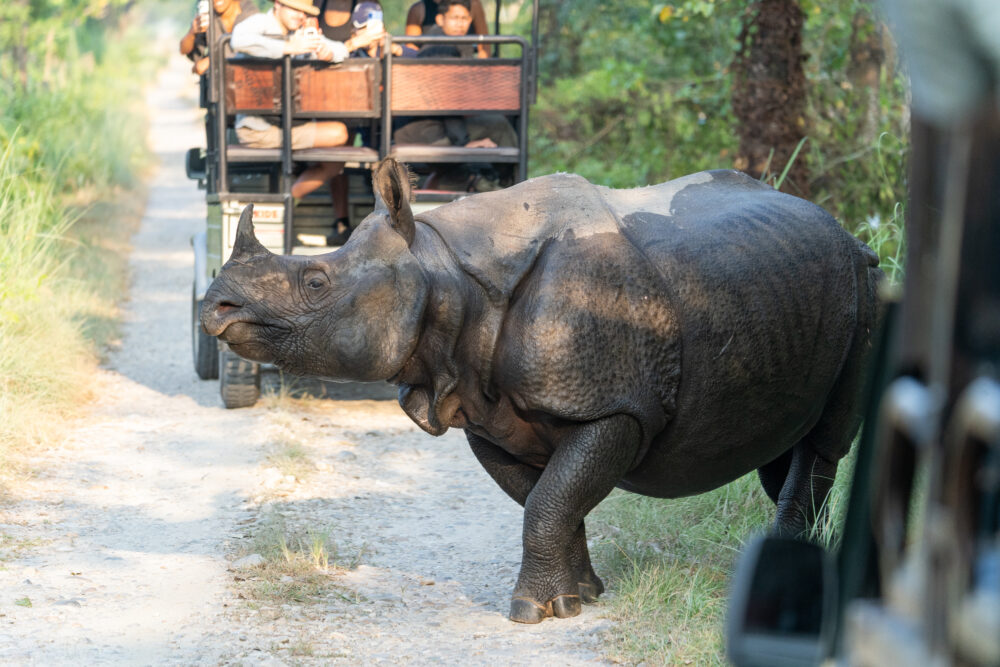
Yes, this option is cheap. $30-$50 a person. But this is where Chitwan gets its “bad” reputation. This is where it gets a little questionably ethical. You will see quite a bit of wildlife. The park officials know that this loop has loads of rhinos and deer who hang around it. You’ll also see bumper-to-bumper traffic, trash thrown about, and tourists behaving badly.
I really don’t recommend this option unless you only have a half-day to devote to Chitwan and you don’t particularly care about anything other than seeing a rhino.
3. Walking Safari Half-Day or Full-Day
This is my personal favorite safari option in Chitwan National Park. For starters, I think it is SO unique that they allow walking safari at all in the park, considering the density of predators. You can choose between a half-day or full-day jungle trek with your guide to go look for wildlife close up and on their level.
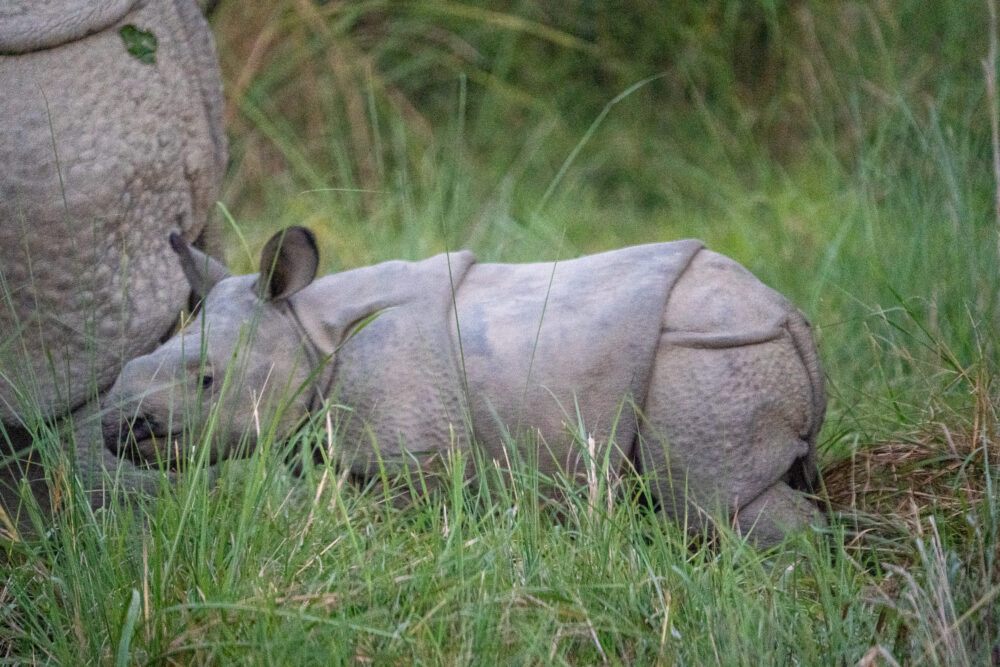
On our walking safari, we got to see three rhinos at very close distance. One of them had a baby and was close to fighting with a male. By far, the highlight of our Chitwan experience. We also got to see a Great Hornbill and other wildlife on our half-day walk.
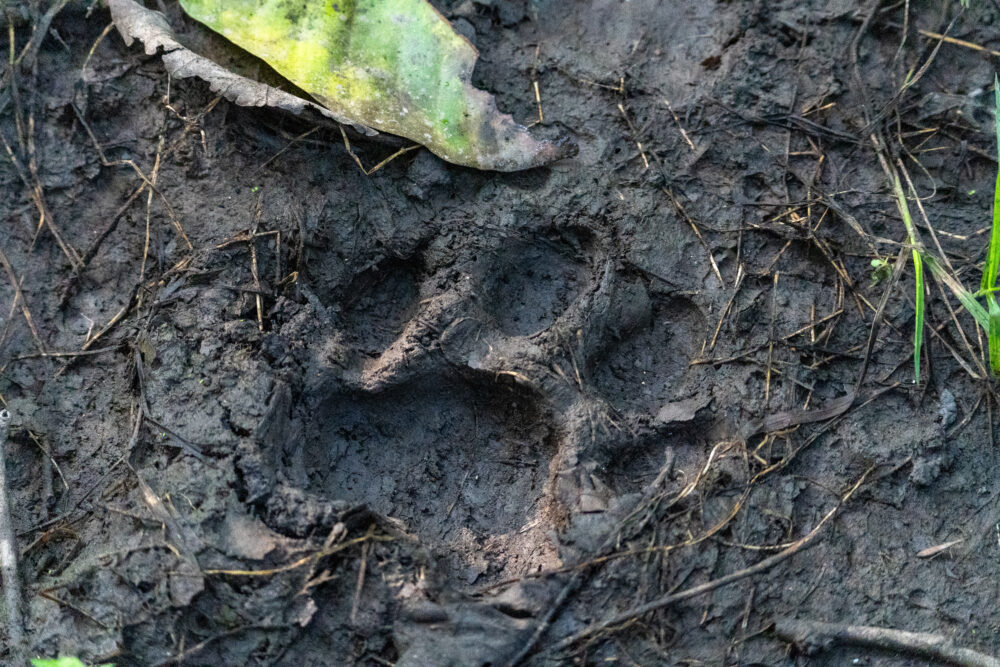
A warning about Leeches: If you are visiting after the rainy season, Sept/Oct, expect LOTS of leeches. You should tuck your pants into your socks and your shirt into your pants. Wear long sleeves and pants. Even still, I got eaten alive by leeches. Fortunately, after the rains, they pretty much go away and aren’t a problem year-round. They don’t carry disease and aren’t dangerous, so it’s more of just an annoyance.
Do keep in mind, for a walking safari, you’ll be walking off-trail in the jungle, and there are a lot of risks involved with that, which I will cover below. It’s also SO hot. You need to bring lots of water and be prepared for a hot, sweaty hike.
Want an even longer hike? Real nature lovers will opt for a multi-day trek in the park. While you can’t sleep overnight in the park (even camping), this is a great way to explore if you love immersing in nature. Sapana can arrange a multi-trip like this with stays in nearby homes bordering the park.
Should You Take a Walking Safari?
There are a few places online you’ll find that say that walking safaris are not safe and unnecessarily put the guides and yourself at risk.
We asked all our guides and the naturalist at Sapana, how they felt about potentially banning walking safaris or, at the very least, encouraging tourists NOT to do them… and they all unanimously agree that they actually enjoy walking safaris. 99% of the guides in Chitwan are animal lovers who have grown up around the jungle. They gather wood there during permitted times of year and live among the native wildlife. Yes, there is a risk of coming into contact with a predator, but they already live that risk all the time.
Most importantly, they love how, when you go on a walking safari, you are a part of the jungle. You don’t blow through it like the jeeps. They get a chance to show off their tracking and wilderness skills. As our guide, Santos, said, “If you take all the risk out of the forest, then it’s no longer a forest.” Nature comes with inherent risk, and to erase all of it would be to turn it into a theme park.
Given this information, I think it’s important that tourists understand the risk they are putting themselves in…ie, bear attacks, tiger prowlings, and rhino or elephant tramplings, and make the decision that is right for them. We LOVED our walking safari. Our guide had encountered all the animals of the forest previously, but only once was a tourist attacked by a sloth bear with a cub (she lived) on his watch (not his fault).
4. Canoe Safari
This is a super quick 1-2 hour adventure along the placid waters of the river, usually in the early morning hours. You’ll see Gharial, Crocodiles, and lots of birds usually. I wouldn’t personally go out of my way to add this safari to my itinerary unless I were a massive birder. Or maybe had never seen a croc before. It was peaceful and lovely.
Attractions You Should Avoid in Chitwan National Park
Just to be abundantly clear, there are lots of attractions in the Chitwan area that are definitely not ethical or well-managed that we do not recommend. Here’s a quick list so that you can avoid the shittier parts of tourism in the area.
- Elephant Rides. Of any kind.
- Visiting the elephant breeding center. As you can see on this ethical elephant website, the breeding center here, while pitching itself as an ethical way to hang out with elephants, actually just breeds them for ride camps and hard labor.
- Half-Day Jeep Safari. This one is more just for your own enjoyment.
We loved our time in Chitwan National Park. It’s a great place to see unique wildlife, pretty landscapes, learn about the local Tharu culture, and relax in Nepal after (or before) your big mountain treks. But of course, I can see why so many people feel less than thrilled with their experience there. Hopefully, this guide will help you navigate the pitfalls and actually see some wildlife in a rewarding way on your next trip to Nepal.
Save This Post For Later!